Global demand for plastic parts continues to expand across automotive, electronics, medical devices, packaging, and industrial equipment. The OECD’s Global Plastics Outlook reports that annual global plastic production reached about 460 million tonnes in 2019. That scale creates opportunity, but it also increases sourcing risk. Quality variation remains expensive.
This guide reviews ten plastic parts suppliers serving international buyers. The comparison considers molding capability, material traceability, tooling support, production capacity, certifications, inspection systems, and export experience. ISO 9001 provides a useful quality baseline, while IATF 16949 and ISO 13485 may matter for automotive and medical applications. Buyers should also examine dimensional reports, resin certificates, PPAP support, and sample approval procedures. Small details matter. A warped housing can delay an entire assembly line.
Supplier capability is not measured by factory size alone. The World Bank’s Logistics Performance Index 2023 shows that customs, shipment reliability, and supply-chain visibility strongly influence international purchasing outcomes. Therefore, this list also considers communication speed, packaging controls, lead-time transparency, and after-sales response. These factors are easy to overlook.
No ranking is perfect. A supplier excellent at high-volume injection molding may struggle with low-volume prototypes or complex overmolding. Prices can change with resin markets, tooling design, order quantities, and freight conditions. Buyers should verify current certificates and request production samples before signing long-term agreements. Use this overview as a practical starting point, not a substitute for technical due diligence.
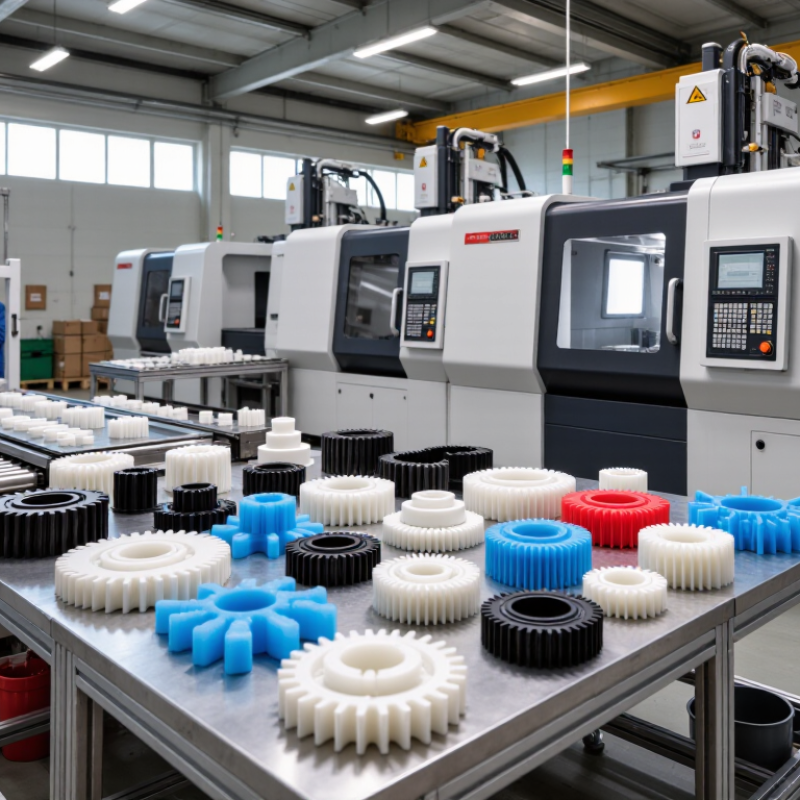
When comparing the top 10 plastic parts suppliers for global buyers, reliability means more than low pricing. A dependable supplier explains material grades, molding methods, tolerances, and expected service life clearly. They provide recent inspection records, sample parts, and practical production timelines. I have found that experienced suppliers ask detailed questions about load, heat, chemicals, and assembly conditions. That conversation often reveals real technical competence.
Quality systems matter, but paperwork alone is not proof. Look for traceable batch records, calibrated measuring equipment, and a documented response process for defects. Reliable suppliers communicate early when tooling, resin availability, or dimensional risks may affect delivery. Their engineers should suggest design improvements without hiding possible cost increases. Even experienced buyers misjudge this step. A polished presentation can still conceal weak production control.
Tips: Request a small trial order before approving large volumes. Compare samples under actual operating conditions, not only on a workbench. Check whether the supplier keeps communication consistent after receiving payment. Ask for references from similar applications, while verifying them independently. Clear agreements should cover drawings, revisions, inspection standards, packaging, and corrective actions. A supplier that admits a limitation may be more trustworthy than one promising everything. Reliability is built through evidence, steady communication, and repeatable results.
When comparing global plastic parts manufacturers, price should not lead the decision. The Plastics Europe Plastics–the Fast Facts 2024 report estimates global plastics production reached 413.8 million tonnes in 2023. That scale increases supply risks, especially for buyers needing stable resin grades, tooling control, and repeatable output. Review molding methods, dimensional tolerances, material certificates, and documented quality procedures. Ask for sample inspection reports, not only factory photos.
Capacity needs proof. Compare machine tonnage, mold maintenance records, production utilization, and backup equipment. The OECD Global Plastics Outlook projects plastic waste could nearly triple by 2060 without stronger intervention. This makes material traceability and scrap management practical evaluation points, not decorative claims. Check whether suppliers track recycled content, process waste, and energy use by production line. Request recent audit evidence.
Delivery performance also deserves close attention. The World Bank Logistics Performance Index 2023 shows major differences between countries in customs, infrastructure, and shipment reliability. A capable manufacturer may still miss deadlines through weak export coordination. Evaluate lead-time history, packaging tests, communication routines, and contingency planning. Price is not enough. No scorecard is perfect. I still overvalue technical capability when reviewing suppliers; service discipline often decides whether a production launch survives real pressure. A trial order can reveal more than a polished presentation.
International buyers need more than a low quotation when choosing plastic parts suppliers. The strongest ten usually provide injection molding, CNC finishing, tooling, and assembly under one controlled process. Their teams review wall thickness, draft angles, shrinkage, and material selection before production begins. This practical review can prevent warped housings and weak snap-fits.
Reliable suppliers share material certificates, inspection reports, and dimensional records. They should explain whether their factories follow ISO 9001 systems and can support requirements such as RoHS or REACH. Buyers should also check mold ownership, revision control, packaging methods, and export experience. A supplier may offer excellent samples but struggle with stable volume production. That difference is easy to miss.
The better suppliers use samples, first-article inspections, and measurable acceptance criteria. They confirm tolerances with drawings instead of vague promises. International teams should ask about lead times, customs documents, spare mold components, and responses to nonconforming parts. Video factory audits can reveal storage conditions, machine capacity, and inspection equipment. Still, remote checks are imperfect. I would not treat polished photographs as proof of process control.
When comparing the top 10 plastic parts suppliers, examine manufacturing capabilities before reviewing price. Injection molding suits high-volume parts with repeatable dimensions. CNC machining works better for prototypes and small batches. Some suppliers also offer insert molding, overmolding, blow molding, and rapid tooling. Ask about machine ranges, mold maintenance, cycle times, and production capacity. A factory should explain how it manages warpage, sink marks, flash, and color variation.
Material expertise matters just as much. Reliable suppliers should identify resin grades, additives, recycled content, and temperature limits. Request material certificates and sample reports. For demanding parts, check tensile strength, impact resistance, dimensional tolerance, and chemical exposure results. Quality systems such as ISO 9001 can support consistency, but certification alone proves little. Review inspection records, calibration dates, traceability methods, and corrective-action procedures. No supplier is perfect. Even a strong process may reveal weaknesses during seasonal production pressure.
Tips: Send a complete drawing, 3D file, annual volume, and application details. Ask for a first-article inspection before mass production. Compare measured samples with the drawing, not only photographs. Confirm packaging protects thin walls and cosmetic surfaces. Independent testing can be useful for safety-critical components. A polished factory tour may still miss an unnoticed mold defect, so repeat audits and clear acceptance criteria remain necessary.
Choosing among the top 10 plastic parts suppliers requires more than comparing unit prices. Your project needs a supplier that can prove capability, consistency, and communication. Request sample parts, inspection reports, and process details before signing a contract. A molded housing may look excellent, yet fail after heat, pressure, or repeated assembly. Ask how the supplier controls resin batches, mold wear, dimensions, and surface defects. Small details matter.
Review experience with your material, tolerance range, annual volume, and production method. A supplier skilled in simple covers may struggle with thin walls or tight snap fits. Discuss design-for-manufacturing feedback while drawings remain flexible. Reliable engineers will flag sink marks, warpage, difficult ejection, and unnecessary tooling costs. Confirm who owns the mold, stores inspection data, and manages engineering changes. Written answers are useful.
Visit the facility when possible, or request a live video audit of key production areas. Check whether operators follow documented inspections rather than relying on final sorting. Ask for a realistic pilot schedule, corrective-action process, packaging plan, and delivery evidence. Do not accept polished promises without measurable records. A low quote can become expensive after missed tolerances and rushed tooling. Still, no supplier is perfect. Leave room for risk, learning, and a second sample review before scaling production.
Anonymous supplier profiles based on common global plastic manufacturing capabilities and buyer qualification criteria.
| Profile | Primary Region | Best-Fit Buyer | Core Processes | Common Materials | Typical Volume | Indicative Lead Time | Quality Evidence to Request | Main Selection Advantage | Key Risk to Verify |
|---|---|---|---|---|---|---|---|---|---|
| Supplier Profile 01 | East Asia | High-volume consumer products | Injection molding, insert molding, assembly | PP, ABS, PC, PA, POM | 50,000–5,000,000+ parts/year | 6–12 weeks after tool approval | FAI report, material certificate, capability study, inspection records | Competitive unit cost at scale | Tool ownership, change control, and export documentation |
| Supplier Profile 02 | Southeast Asia | Automotive and industrial components | Precision injection molding, overmolding, welding | PA66, PBT, PC/ABS, PPS, TPU | 20,000–1,000,000 parts/year | 8–16 weeks including validation | Process-control plan, traceability records, gauge calibration, PPAP-style file | Strong engineering and production discipline | Resin availability and subcontracted secondary operations |
| Supplier Profile 03 | Central Europe | Regulated medical and laboratory products | Cleanroom molding, assembly, inspection | Medical-grade PP, PE, PC, POM, PEEK | 10,000–500,000 parts/year | 10–20 weeks depending on validation | ISO 13485 certificate, validation protocol, biocompatibility and cleanliness records | Documented compliance systems | Higher tooling and piece-part costs |
| Supplier Profile 04 | North America | Short-run industrial and replacement parts | CNC machining, 3D printing, urethane casting | ABS-like resin, nylon, PC, TPU, acetal | 1–10,000 parts/order | 3 days–6 weeks | Dimensional report, build orientation record, material data sheet | Fast prototyping and low minimum order quantities | Higher unit cost and limited economies of scale |
| Supplier Profile 05 | Western Europe | Premium consumer and cosmetic packaging | Injection molding, blow molding, decoration | PET, PP, PE, SAN, recycled polymers | 100,000–10,000,000 units/year | 8–18 weeks | Color standard, cosmetic inspection standard, recycled-content declaration | Finishing and appearance control | Color variation and sustainability-claim substantiation |
| Supplier Profile 06 | South Asia | Cost-sensitive household and electrical products | Injection molding, compression molding, assembly | PP, ABS, HIPS, nylon, phenolic compounds | 25,000–2,000,000 parts/year | 8–16 weeks | Pre-shipment inspection, batch records, incoming material checks | Low-to-moderate production cost | Capacity planning, communication speed, and logistics reliability |
| Supplier Profile 07 | Latin America | Regional supply and near-market replenishment | Injection molding, extrusion, thermoforming | PP, HDPE, LDPE, ABS, PVC | 10,000–1,000,000 parts/year | 4–12 weeks for standard programs | Local audit, dimensional inspection, production capacity statement | Shorter regional transport routes | Resin sourcing and tooling availability |
| Supplier Profile 08 | Middle East and North Africa | Construction, utility, and infrastructure parts | Extrusion, rotational molding, injection molding | HDPE, MDPE, PP, PVC, glass-filled nylon | 5,000–500,000 parts/year | 6–14 weeks | Pressure testing, dimensional records, UV and weathering data where applicable | Experience with outdoor-use products | Long-term outdoor durability and regional standards compliance |
| Supplier Profile 09 | Eastern Europe | Industrial automation and technical assemblies | Precision molding, insert molding, automated assembly | PBT, PA, PC, POM, LCP | 25,000–1,500,000 parts/year | 8–16 weeks | Measurement-system analysis, process capability, serialized traceability | Good fit for complex technical parts | Engineering-change responsiveness and capacity expansion |
| Supplier Profile 10 | Global contract manufacturer | Multi-site programs requiring supply-chain resilience | Injection molding, machining, assembly, packaging | PP, ABS, PC, PA, PBT, TPE, specialty compounds | 100,000–20,000,000+ parts/year | 10–24 weeks for new programs | Multi-site audit, business-continuity plan, supplier-risk matrix, KPI history | Scalable production and geographic redundancy | Complex governance, minimum annual commitments, and communication layers |