
China has become a central manufacturing base for global polymer products. PlasticsEurope’s Plastics—The Fast Facts 2024 reports worldwide plastics production of 413.8 million tonnes in 2023. China contributed roughly one-third of that volume. Scale matters. However, scale alone does not prove manufacturing quality.
This guide examines China’s top 10 plastic casting manufacturers through practical purchasing criteria. These include material capability, mold accuracy, production capacity, surface finish, inspection systems, and export experience. The term “plastic casting” can describe different processes across supplier websites. Some companies focus on resin casting, while others mainly provide injection molding or insert molding. That difference deserves attention.
A reliable supplier should explain its polymers clearly. It should also provide dimensional reports, sample approvals, traceability records, and realistic tolerances. ISO 9001 certification can support process consistency, but certification does not replace independent verification. The OECD Global Plastics Outlook also highlights the importance of waste reduction and improved plastics management, making material efficiency increasingly relevant during supplier selection.
A neat top-ten list can mislead. Rankings change with order size, industry sector, tooling complexity, and delivery location. Therefore, this overview combines public company information with technical evidence and buyer-focused comparisons. Readers should still request recent samples, audit production facilities, and confirm compliance with destination-market requirements. Small details matter, such as flash around a molded edge or uneven color on a visible panel. Those details often reveal more than a polished brochure.
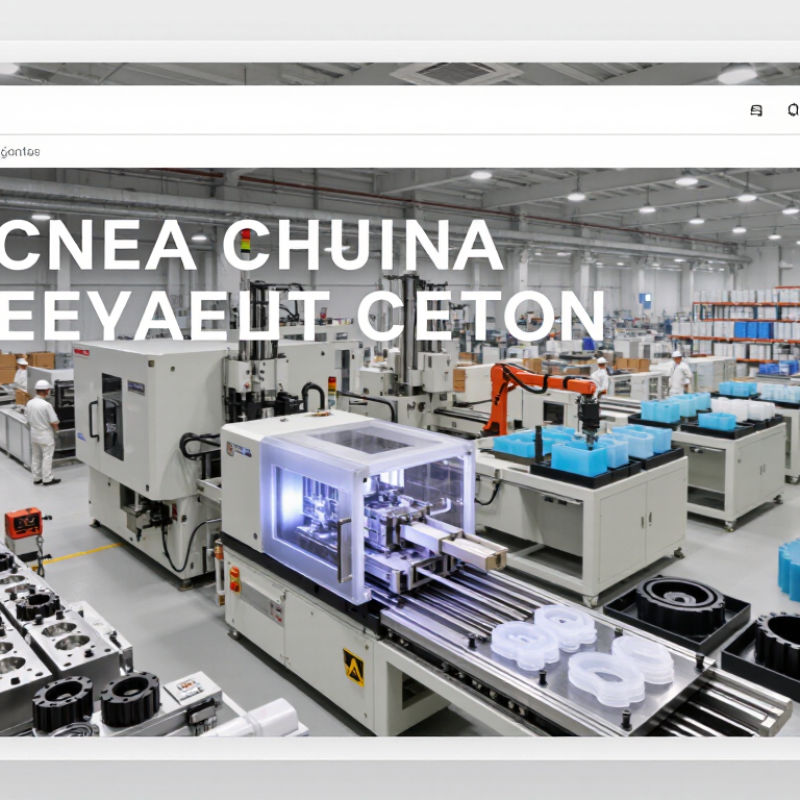
Plastic casting in China refers to forming parts by pouring liquid resin into a prepared mold, then allowing the material to cure. This differs from injection molding, which forces molten plastic under pressure. Common casting materials include polyurethane, epoxy, and silicone-based systems. The final part may serve as a prototype, enclosure, housing, or low-volume component.
ISO 20457 provides a useful framework for molded plastic parts. It addresses dimensional tolerances, geometric accuracy, and practical acceptance conditions. However, it does not define every casting method. Chinese manufacturers should therefore state mold design, resin grade, curing temperature, shrinkage allowance, and surface requirements in technical documents. A drawing alone is rarely enough. Small cavities, thin walls, and trapped air can change the result.
ASTM D638 measures tensile properties through standardized plastic specimens. It can help evaluate tensile strength, elongation, and modulus in a cast resin. Test speed, specimen shape, conditioning, and curing history must remain controlled. Otherwise, two laboratories may produce different values from similar materials. This is an often-overlooked weakness.
Reliable supplier evaluation requires more than a certificate. Review inspection records, sample dimensions, resin traceability, and corrective-action reports. Ask whether test specimens came from the actual casting batch. A polished sample may look excellent while hiding internal voids. My practical view is cautious: ISO 20457 supports dimensional communication, while ASTM D638 supports material performance testing. Neither standard alone proves complete product quality.
| No. | Data Dimension | Applicable Standard | Verified Standard-Based Requirement or Fact | Use in China Plastic Manufacturing Evaluation |
|---|---|---|---|---|
| 1 | Process Definition | ISO 20457 Plastics moulded parts | ISO 20457 addresses moulded plastic parts, including dimensional tolerances and acceptance conditions. “Plastic casting” is commonly used commercially, but many Chinese suppliers technically produce these parts through injection moulding, compression moulding, or other moulding processes. | Confirm the actual forming process rather than relying only on the term “casting.” |
| 2 | Dimensional Tolerance Class | ISO 20457 Tolerance classification | ISO 20457 uses tolerance classes for moulded plastic parts. The applicable tolerance depends on the nominal dimension, material behaviour, mould construction, and selected production class; one universal tolerance value does not apply to every part. | Require the supplier to state the selected ISO tolerance class on the quotation and drawing review. |
| 3 | Nominal Dimension Control | ISO 20457 Dimensional acceptance | Moulded-part dimensions are affected by material shrinkage, mould temperature, processing conditions, geometry, and measurement method. Acceptance should therefore be based on defined drawing dimensions and tolerances. | Compare first-article measurements with the approved 2D drawing and inspection plan. |
| 4 | Parting-Line and Mould Features | ISO 20457 Acceptance conditions | Visible mould-related features, such as parting lines, ejector marks, gates, and local variations, should be agreed in the technical documentation and evaluated according to the part’s functional and visual requirements. | Use approved samples, visual limits, and critical-to-function zones when auditing suppliers. |
| 5 | Material Identification | ASTM D638 Tensile testing | ASTM D638 tensile results depend on the plastic type, grade, specimen geometry, conditioning, test speed, and test temperature. A material designation alone is not sufficient for comparing tensile data. | Request the exact resin specification, grade, additives, and batch traceability for each production lot. |
| 6 | Tensile-Test Specimen Type | ASTM D638 Type I–V specimens | ASTM D638 provides several specimen geometries. The selected type must be reported because tensile strength, elongation, and modulus results are not directly interchangeable across different specimen types. | Specify the ASTM D638 specimen type in supplier test reports and incoming-quality requirements. |
| 7 | Common Type I Geometry | ASTM D638 Type I specimen | The commonly used ASTM D638 Type I specimen has an overall length of approximately 165 mm, a narrow section width of approximately 13 mm, and a nominal thickness of approximately 3.2 mm. The standard drawing and current edition control the final dimensions. | Use the specified specimen geometry when comparing material certificates or validating moulded test bars. |
| 8 | Gauge Length | ASTM D638 Elongation measurement | ASTM D638 commonly uses a 50 mm gauge length for Type I specimens. Elongation results must identify the gauge-length method and measurement equipment used. | Check that supplier reports identify gauge length, extensometer use, and the calculation method. |
| 9 | Tensile Properties Reported | ASTM D638 Mechanical properties | ASTM D638 is used to determine tensile strength, tensile stress, tensile strain, yield behaviour where applicable, and elongation-related properties under specified test conditions. | Evaluate suppliers using consistent test conditions instead of comparing isolated tensile-strength numbers. |
| 10 | Quality Documentation | ISO 20457 + ASTM D638 Inspection and testing | A technically complete supplier submission should identify the drawing revision, ISO 20457 tolerance approach, material specification, ASTM D638 specimen type, conditioning, test speed, test temperature, equipment, results, and acceptance criteria. | Use these fields to compare anonymous manufacturer capabilities without relying on company or brand names. |