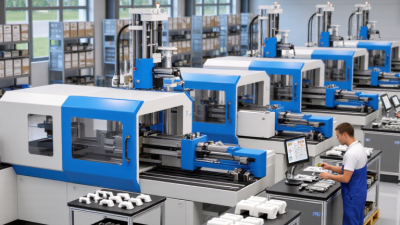
Finding the right China best plastic parts manufacturer and supplier requires more than comparing prices. It demands evidence, technical judgment, and clear communication. Reliable suppliers understand injection molding, CNC machining, material selection, and production tolerances. They can explain why ABS suits a rugged enclosure, while POM performs better in a low-friction gear.
A capable manufacturer should provide practical support from design review to final inspection. Engineers may check wall thickness, draft angles, shrinkage, and possible sink marks before tooling begins. This early experience can prevent costly mold changes later. It also helps buyers develop plastic parts that fit real production needs, not just attractive drawings.
Quality should be visible.
Look for documented material certificates, dimensional inspection reports, sample approval procedures, and traceable production records. ISO certification may support confidence, but it should not replace direct verification. A factory visit, video audit, or independent inspection can reveal details that polished websites hide.
Some suppliers promise everything. That deserves caution. A dependable partner admits limitations, discusses lead-time risks, and suggests realistic alternatives. Communication matters when a prototype needs a tighter tolerance or a shipment faces delay. Transparent feedback often saves more money than an unusually low quotation.
This guide explores how to evaluate Chinese plastic parts manufacturers and suppliers through capability, quality control, engineering experience, customization, and service reliability. It also considers a difficult truth: the cheapest option may become expensive after defects, rework, and missed delivery dates. Careful comparison creates a stronger foundation for consistent products and long-term cooperation.

China Best Plastic Parts Manufacturer and Supplier
China’s Plastic Parts Industry: 400.3 Million Tonnes of Global Output in 2022
Global plastics output reached 400.3 million tonnes in 2022. China remained one of the world’s largest production centers. This scale supports strong tooling networks, skilled technicians, and flexible material sourcing. For buyers, it also creates more choices. Not every supplier offers the same control, however. A reliable manufacturer should explain resin grades, mold design, tolerances, and inspection methods clearly.
In practical projects, quality begins before injection molding starts. Engineers review wall thickness, draft angles, shrinkage, and possible warping. Trial samples should be measured with calibrated equipment. Production records should connect each batch with its material certificate and inspection results. Small details matter. A 0.2-millimeter mismatch can affect assembly, sealing, or surface appearance. I have seen low quotations become expensive after repeated mold corrections. Price alone is a weak purchasing standard.
Tips: Request a detailed drawing review before ordering. Ask for sample approval and dimensional reports. Confirm packaging, delivery terms, and after-sales communication. A factory without perfect answers may still be capable, but unclear responses deserve reflection. Consider a small pilot order before full production. It reveals consistency better than a polished presentation. Clear specifications, documented inspections, and direct technical communication create a safer path for sourcing plastic parts from China.
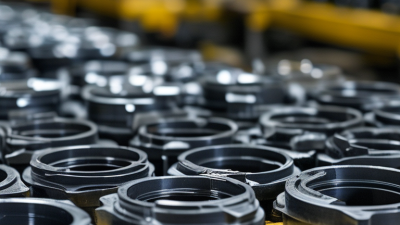
China’s plastic parts manufacturers support more than 30 application sectors through flexible tooling and varied production methods. Their work reaches automotive interiors, medical equipment, consumer electronics, home appliances, lighting, packaging, agriculture, construction, and industrial machinery. Other sectors include sports equipment, furniture, water treatment, renewable energy, laboratory devices, and transportation systems.
Experienced suppliers usually begin with the part’s working conditions. They review heat, pressure, chemical contact, impact, and expected service life. Engineers then select suitable resins, additives, mold structures, and surface finishes. Injection molding serves high-volume parts, while CNC machining and low-volume molding support testing or specialized orders. Clear drawings, tolerance reviews, and sample inspections reduce avoidable production problems.
Quality control needs more than a final visual check. Reliable factories monitor mold maintenance, material batches, dimensional results, and packing records. They may use gauges, coordinate measuring equipment, and performance tests. Documentation also helps buyers manage sector-specific requirements. Yet no supplier fits every project. Some quotations look attractive but hide tooling limits or weak inspection plans. That risk deserves honest discussion. Production schedules can also shift when designs change late. A capable partner explains these limits early, adjusts the process, and keeps communication practical across development, sampling, and mass production.
Material Selection: Comparing 10 Common Engineering Plastics by Performance
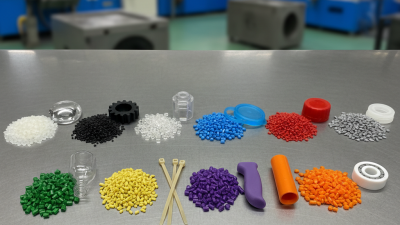
Choosing plastic parts starts with the working conditions, not the material name. In our manufacturing experience, ABS offers easy processing and good impact resistance for housings. Polycarbonate withstands higher impacts and heat, but it may scratch more easily. Nylon provides strength and wear resistance, although it absorbs moisture and can change size. POM delivers low friction for gears and sliding components. PBT resists chemicals and performs well around electrical connectors. PET offers stiffness and stable dimensions in dry environments.
PPS handles demanding heat and chemical exposure with strong dimensional stability. PEI supports high temperatures and flame-resistant applications, but its cost can limit production choices. PTFE provides exceptional chemical resistance and very low friction, yet it is softer and harder to mold accurately. PVC offers useful chemical resistance and insulation, though temperature performance depends heavily on its formulation. These comparisons are practical guidelines, not fixed answers. A material that performs well in a laboratory can fail beside a hot motor, under repeated vibration, or after moisture absorption. We sometimes overestimate strength and underestimate assembly stress.
Tips: Define temperature, load, friction, moisture, chemicals, tolerances, and expected service life. Test the finished part, not only a material sample. Small details matter. A prototype may reveal warping, brittle edges, or unexpected wear before full production.
Representative material-level performance indices based on typical tensile strength, thermal resistance, and chemical resistance. Actual values vary by grade, additives, moisture, and processing conditions.
PEEK and PPS offer the strongest combined high-temperature and chemical performance, while ABS, PP, and HDPE provide cost-effective solutions for general-purpose applications. Material selection should also consider load, temperature, moisture, wear, and regulatory requirements.
A reliable China-based plastic parts manufacturer should match each design with the right manufacturing process. Injection molding suits repeated production and stable dimensions. It uses a steel or aluminum mold to form parts under controlled pressure. We check gate positions, wall thickness, shrinkage, and cooling lines before production begins. Small details matter.
CNC machining supports prototypes, low-volume orders, and parts needing tight tolerances. It can shape engineering plastics with clean edges and accurate holes. Operators inspect critical dimensions with calipers, micrometers, and coordinate measuring equipment when required. A drawing alone is not enough. Material selection also affects strength, heat resistance, surface finish, and service life.
3D printing helps teams test form and fit before investing in tooling. It can produce a functional sample within a short development cycle. However, printed parts may show visible layers or different mechanical behavior. This limitation needs honest discussion. We review the model, application, quantity, and expected environment before recommending a process. Sometimes, a simple design revision prevents warping or weak corners. We do not claim every first design is perfect. Production feedback can reveal issues that software misses. Clear records, sample approval, and traceable inspections support consistent supply. There is still room to improve.
| Comparison Dimension | Injection Molding | CNC Machining | 3D Printing |
|---|---|---|---|
| Basic Process | Molten plastic is injected into a metal mold, cooled, and ejected as a finished part. | Material is removed from a solid plastic block or sheet using computer-controlled cutting tools. | Plastic material is deposited, cured, or fused layer by layer from a digital 3D model. |
| Common Materials | ABS, polypropylene (PP), polyethylene (PE), polycarbonate (PC), nylon (PA), POM, TPU, and glass-filled engineering plastics. | ABS, acrylic (PMMA), nylon, POM, PC, PVC, polypropylene, PTFE, and high-performance plastics such as PEEK. | PLA, ABS, ASA, PETG, nylon, TPU, resin, and selected fiber-reinforced materials, depending on the printing technology. |
| Typical Production Volume | Best suited to medium- and high-volume production after the mold has been manufactured. | Suitable for prototypes, low-volume production, and customized parts; economical quantities depend on geometry and machining time. | Best suited to prototypes, design verification, customized parts, and low-volume production without dedicated tooling. |
| Tooling Requirement | Requires a dedicated mold, commonly made from aluminum or tool steel. | No dedicated mold is required; standard cutting tools, fixtures, and workholding equipment are used. | No dedicated mold is required; only a digital CAD model and process-specific build setup are needed. |
| Dimensional Accuracy | Often approximately ±0.05 to ±0.20 mm for suitable features, depending on material, mold design, part size, and process control. | Often approximately ±0.02 to ±0.10 mm for suitable features, depending on machine capability, material, tooling, and geometry. | Commonly approximately ±0.10 to ±0.50 mm, depending on the printing technology, material, orientation, and part size. |
| Surface Finish | Can range from textured to polished surfaces; the final appearance is largely determined by the mold surface. | Typically produces a machined finish; polishing, bead blasting, vapor smoothing, or painting may be added. | Usually shows visible layer lines or build texture; sanding, coating, vapor smoothing, or painting may improve the finish. |
| Part Geometry | Supports complex shapes, ribs, bosses, snap-fits, and thin walls when designed with appropriate draft angles and uniform wall thickness. | Produces precise features, holes, slots, and flat surfaces; internal channels and undercuts may require special tools or multiple setups. | Supports complex internal structures, lattice features, organic shapes, and geometries that may be difficult to machine or mold. |
| Material Utilization | Generally efficient; runners, sprues, and rejected parts may be recycled or reground when material specifications permit. | Generates chips and offcuts because material is removed from a larger stock piece; some scrap may be recyclable. | Usually generates limited waste, although support structures, rafts, failed builds, and post-processing waste may occur. |
| Typical Lead-Time Factors | Includes mold design, mold fabrication, sampling, dimensional inspection, and production setup; production cycles are often short once the mold is approved. | Includes programming, material preparation, fixture setup, machining, inspection, and finishing. | Includes design preparation, print orientation, slicing, build time, support removal, curing or drying, and finishing. |
| Per-Part Cost Trend | Higher initial tooling cost but generally lower unit cost at larger production quantities. | Moderate to high unit cost for complex or time-consuming parts; no mold investment is normally required. | Low setup cost and potentially higher unit cost, especially for large parts, long print times, or extensive post-processing. |
| Design Considerations | Draft angles, uniform wall thickness, shrinkage, ejection, parting lines, gates, weld lines, and sink marks should be considered. | Tool access, corner radii, clamping, workholding, cutting depth, minimum feature size, and material stability should be considered. | Layer direction, anisotropy, support requirements, overhang angle, build orientation, shrinkage, and post-processing should be considered. |
| Best-Fit Applications | Consumer products, automotive components, electrical housings, medical-device components, appliance parts, and packaging components. | Precision prototypes, mechanical components, transparent covers, fixtures, custom housings, and functional low-volume parts. | Rapid prototypes, concept models, ergonomic samples, customized components, replacement parts, and low-volume complex geometries. |
| Quality-Control Methods | First-article inspection, dimensional measurement, visual inspection, material verification, functional testing, and process monitoring. | Coordinate measuring machines, calipers, micrometers, optical inspection, surface-finish measurement, and functional testing. | Dimensional inspection, visual layer inspection, material or resin verification, tensile testing when required, and functional checks. |
| Recommended Selection | Choose when repeatable parts and competitive unit cost are required at medium or high quantities. | Choose when tight tolerances, strong functional surfaces, or rapid low-volume production are priorities. | Choose when speed, design flexibility, tooling-free production, or highly customized geometry is most important. |
| Important Note | Actual tolerances, lead times, material performance, surface quality, and cost vary with part size, geometry, material grade, equipment, design requirements, and inspection standards. | ||
A reliable plastic parts supplier should show controlled processes, not only attractive samples. ISO’s 2022 Survey recorded 1,265,216 ISO 9001 certificates worldwide. Certification alone proves little, however. Ask for the current certificate, audit scope, corrective-action records, and inspection plans. Check whether the certified site actually performs molding, tooling, and final inspection. Production records should connect resin batches, machine settings, operator checks, and shipment approvals. Small gaps matter.
Lead time needs measurable evidence. The World Bank’s 2023 Logistics Performance Index treats timeliness, tracking, customs, and infrastructure as separate logistics factors. Request a capacity plan, mold-maintenance schedule, and recent on-time delivery rate. Confirm sample approval dates, not vague promises. A supplier quoting seven days may exclude tooling changes, dimensional approval, or material shortages. It sounds efficient. Sometimes it is not.
Cost comparison should separate tooling, resin, labor, packaging, inspection, freight, and possible rework. Plastics Europe reported an 8.3% decline in European plastics production during 2023, showing how market conditions can affect capacity and material pricing. A low quotation may conceal thinner inspection or unstable sourcing. I would challenge unusually low prices, even when the drawing looks simple. One overlooked draft angle can create flash, ejection damage, and repeated production loss. Perfect evaluation is impossible. A documented review is still better than trusting a polished sales presentation.