Top 10 Plastic Dip Molding Types for Global Buyers

Plastic dip molding is a practical manufacturing process for producing flexible, protective, and ergonomic plastic parts. It coats a heated former through controlled immersion in a liquid polymer. After curing, the finished layer can resemble a soft handle, glove, cap, seal, or wire covering. The process looks simple. It is not.

This guide examines the top 10 plastic dip molding types used by global buyers. These include PVC dipping, latex dipping, nitrile dipping, polyurethane dipping, plastisol coating, and thermoplastic elastomer applications. Each type offers different levels of flexibility, chemical resistance, insulation, surface grip, and production efficiency. Buyers should compare polymer behavior, wall thickness, curing temperature, tooling design, and inspection requirements. A bright red tool handle may require very different controls from a thin medical glove.

Industry data shows why process selection matters. PlasticsEurope’s Plastics—the Fast Facts 2024 reported global plastics production of approximately 414 million tonnes in 2023. The OECD’s Global Plastics Outlook reported 353 million tonnes of plastic waste in 2019, nearly double the 2000 level. These figures emphasize material efficiency, durability, and responsible product design. However, broad plastics reports rarely isolate plastic dip molding. Any market ranking is therefore provisional, not absolute. Regional demand, product regulations, and buyer priorities can change the order. Real factory experience still matters. This introduction uses technical comparisons, reported industry evidence, and practical sourcing considerations to help international buyers evaluate the most suitable molding type.
Top 10 Plastic Dip Molding Types for Global Buyers

Plastic Dip Molding: Definition, Process, and Core Advantages

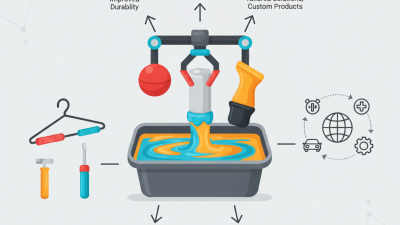
Plastic dip molding is a manufacturing process that forms a protective polymer layer over a shaped mold. A heated mold enters a liquid polymer bath, such as plastisol or rubber-like material. Heat causes the polymer to gel against the mold surface. The mold may receive several dips for greater thickness. After curing, the finished part is removed, trimmed, and inspected. Small hooks, handles, tool grips, seals, and protective caps often use this method.

Production quality depends on controlled temperature, immersion speed, dwell time, and withdrawal rate. Experienced engineers also check polymer viscosity and mold cleanliness before each run. These details influence coating thickness, surface texture, and adhesion.

The process can create flexible, slip-resistant surfaces with strong insulation and impact protection. It also supports complex shapes without expensive secondary assembly. For global buyers, molded samples and thickness records provide useful evidence before volume production. Specifications should include hardness, color tolerance, operating temperature, and chemical exposure.

It is not a perfect solution. Uneven heating can create thin edges, bubbles, or weak bonding. Deep cavities may also challenge reliable coverage. I have seen simple-looking parts require several trials.

Material choice must match the product’s real environment, not only its target price. A careful supplier should explain these limits, document inspection results, and recommend testing under actual use conditions. That practical transparency reduces costly surprises during international sourcing.

Ten Plastic Dip Molding Types and Their Distinctive Features

Top 10 Plastic Dip Molding Types for Global Buyers

Ten Plastic Dip Molding Types and Their Distinctive Features

Plastic dip molding remains useful for protective grips, flexible covers, and hollow components. PlasticsEurope reported 400.3 million metric tons of global plastic production in 2022. That scale highlights the need for controlled material selection. In factory inspections, I check bath temperature, wall thickness, adhesion, and surface defects. Small changes can create visible wrinkles.

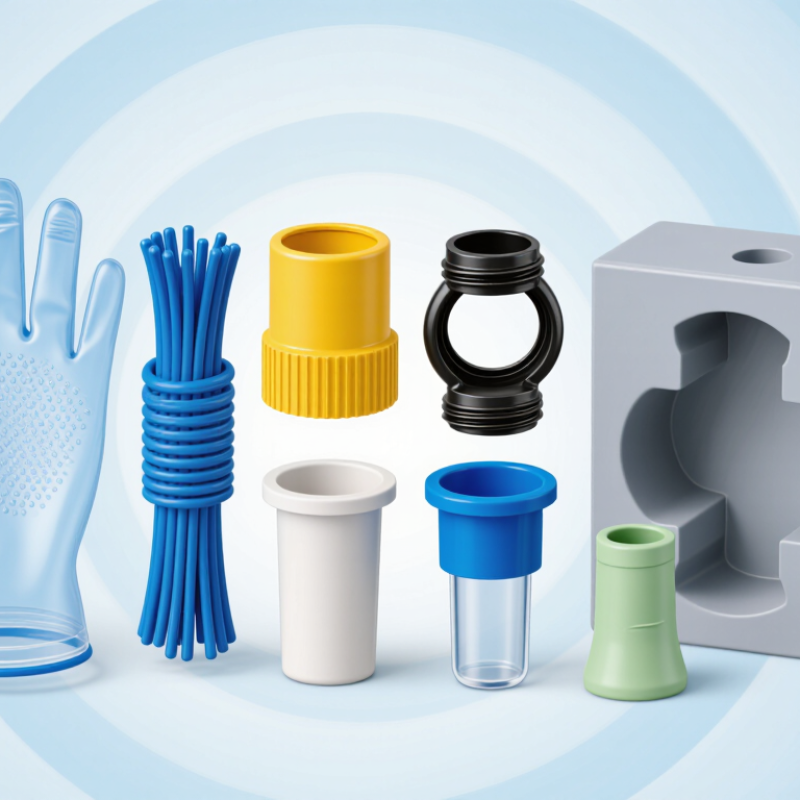
PVC dip molding offers low cost, chemical resistance, and bright colors. Nitrile dip molding improves oil resistance and suits industrial gloves. Latex provides excellent elasticity, but natural proteins may concern sensitive users. Silicone withstands heat and remains flexible across wide temperature ranges. Polyurethane creates tough, abrasion-resistant coatings with a softer touch.

Plastisol dip molding forms smooth, durable layers after heating. Polyethylene provides moisture resistance and economical coverage. Neoprene handles weather exposure and moderate chemicals. Thermoplastic elastomer molding supports recyclable processing and comfortable gripping. Fluoropolymer dipping delivers exceptional chemical and temperature resistance, but costs more and needs careful surface preparation.

A 2024 industry outlook from Grand View Research links rising protective-equipment demand with broader polymer consumption. Yet market forecasts differ by region and application. That weakness matters. Buyers should request actual thickness data, cure records, and aging results. A glossy sample proves little. Salt spray, flexing, and heat-cycle tests reveal the real performance.

Top 10 Plastic Dip Molding Types for Global Buyers

Typical continuous-use temperature limits by material family

Temperature resistance is a key selection factor in dip molding. Fluoropolymer and silicone compounds generally support the highest continuous-use temperatures, while PVC, plastisol, polyethylene, polyurethane, and natural latex are commonly selected for flexibility, insulation, grip, or cost efficiency. Actual performance depends on formulation, wall thickness, processing conditions, and the application environment.

Material, Thickness, and Surface Finish Options by Molding Type

Top 10 Plastic Dip Molding Types for Global Buyers

Material, Thickness, and Surface Finish Options by Molding Type

Plastic dip molding covers several practical routes, and each changes the final part. Plastisol dipping creates flexible PVC coatings for grips, handles, and protective covers. Latex dipping produces thin, elastic films with a smooth or lightly textured surface. Powder dipping builds tougher layers, often with a dry, uniform finish. Fluidized-bed dipping suits metal inserts and can create thicker protective walls. Rotational dipping supports hollow parts, but thickness may vary near corners. Silicone dipping offers heat resistance and a soft touch. Urethane dipping provides abrasion resistance and firm flexibility. Hot-melt dipping bonds quickly, though its temperature range can be limited. Rubber dipping improves grip and impact absorption. Ceramic-filled plastic dipping adds hardness, but may feel less smooth.

Material selection should follow the working environment. Check temperature, chemicals, sunlight, and repeated flexing.

A 0.5-millimeter coating may protect a handle, while a 2-millimeter layer may suit impact-prone hardware. Thicker is not always better. It can hide edges, increase curing time, and raise costs.

That assumption is often wrong.

Surface Finish Considerations

Surface finish deserves equal attention. Smooth finishes clean easily, while textured finishes improve grip with wet gloves. Matte surfaces reduce glare and hide minor marks. Glossy surfaces show defects more clearly.

Ask for sample panels with measured thickness, adhesion results, and visual standards. Suppliers may describe “uniform” differently. Real parts vary.

I would also verify corners and openings, where thin spots commonly appear. A reliable specification states material grade, target thickness, tolerance, color range, and acceptable surface defects.

Global Applications and Industry Requirements for Each Type

Top 10 Plastic Dip Molding Types for Global Buyers

Global buyers should match each dip molding type with its working environment. Plastisol dip molding suits tool handles, protective covers, and flexible industrial parts. Latex dip molding supports elastic gloves and medical components. Nitrile dip molding offers oil resistance for laboratory and automotive use. Neoprene handles weather exposure and moderate chemicals. Polyurethane dipping provides abrasion resistance for rollers, grips, and protective coatings. Silicone dipping supports high-temperature seals and soft-touch medical parts. Polyethylene dipping fits corrosion-resistant tanks, wire coatings, and outdoor hardware. Powder dipping creates durable surfaces on metal components. Fluidized-bed dipping works well for thick, uniform insulation. Electrostatic dipping improves powder transfer and material efficiency.

Industry requirements differ sharply by region and application. Medical products need controlled cleanliness, traceability, and biocompatibility testing under ISO 10993. Protective gloves also require verified barrier performance, tensile strength, and chemical resistance. Electrical parts need consistent dielectric thickness and reliable adhesion. Outdoor components require UV stability, salt-spray resistance, and low-temperature flexibility. Food-contact applications demand suitable migration testing and documented process control. Fit matters. A cheaper coating can fail quickly when humidity, abrasion, or sterilization is underestimated.

The OECD Global Plastics Outlook reports that global plastic production reached 460 million tonnes in 2019, while only 9% of plastic waste was recycled. UNEP’s 2023 report warns that plastic pollution could nearly triple by 2040 without major intervention. Buyers increasingly request recyclable formulations, lower scrap rates, and material declarations. Yet this remains imperfect. Recycling dip-coated parts is often difficult because substrates and coatings bond tightly. Supplier audits should examine curing records, thickness mapping, defect rates, and real-use testing, not attractive samples alone.

How Buyers Can Compare and Select the Right Dip Molding Type

Top 10 Plastic Dip Molding Types for Global Buyers

How Buyers Can Compare and Select the Right Dip Molding Type

Global buyers should compare dip molding types by material behavior, not by catalog labels alone. Common choices include plastisol, PVC, latex, silicone, polyurethane, nitrile, powder, hot-melt, aqueous-emulsion, and elastomeric systems. Each option creates different results. Film thickness, flexibility, surface grip, chemical resistance, and temperature performance can change significantly.

Start with the working environment. A silicone dip layer may suit high-temperature contact, while nitrile can offer stronger resistance to oils. Latex often provides excellent elasticity, but some users may require alternative materials for skin-contact applications. Powder dipping can produce a tough outer layer on metal parts. Ask for measured data, not general claims. Confirm tensile strength, hardness, elongation, coating thickness, and aging performance.

Test the actual part geometry. Sharp edges, deep cavities, and narrow openings can cause uneven coverage. In production reviews, small changes in preheating temperature often affect adhesion and film weight. A neat spreadsheet can still mislead. Request sample parts and inspect them after heat, humidity, abrasion, and chemical exposure. Also compare tooling cost, cycle time, minimum order quantity, and quality-control records. The cheapest type may create more rejects later. Selection is rarely perfect on the first trial. Document every failed sample, because those results often reveal the best process window.

Top 10 Plastic Dip Molding Types for Global Buyers - How Buyers Can Compare and Select the Right Dip Molding Type

Rank Dip Molding Type Typical Material Typical Processing Temperature Typical Coating or Wall Thickness Key Advantages Main Limitations Common Applications Best Fit for Buyers
1 Plastisol Dip Coating PVC plastisol dispersion Preheat commonly 150–230°C; fusion commonly 160–205°C Approximately 0.5–6 mm per application, depending on dwell time and viscosity Soft touch, good electrical insulation, strong abrasion resistance, economical tooling Limited high-temperature capability; PVC formulation requires attention to plasticizers, fumes, and regulatory requirements Tool handles, wire racks, hooks, grips, protective covers, and industrial components Buyers needing a flexible, colorful, cost-effective protective coating for metal parts
2 Fluidized-Bed Powder Dip Molding Thermoplastic powder, commonly polyolefin, polyamide, or PVC Part preheat commonly 180–300°C, material dependent Approximately 0.5–5 mm; multiple dips can increase thickness Uniform coverage on complex shapes, low overspray, good impact and corrosion protection Requires heated metal substrates or heat-resistant inserts; thickness control depends on temperature and immersion time Baskets, guards, racks, hand tools, wire forms, and corrosion-resistant hardware Buyers seeking thicker thermoplastic protection on conductive metal parts without liquid solvents
3 Hot-Melt Thermoplastic Dip Molding Thermoplastic elastomers, polyethylene, polyamide, or other hot-melt polymers Approximately 120–280°C, depending on polymer melting range Approximately 1–8 mm; repeated dipping may create thicker layers Solvent-free processing, flexible material options, good impact resistance, recyclable thermoplastic feedstock Narrower process window than some liquid systems; heat-sensitive substrates may be unsuitable Protective sleeves, soft grips, cable components, seals, and industrial covers Buyers prioritizing solvent-free production and flexible or impact-resistant coatings
4 Latex Dip Molding Natural rubber latex or synthetic latex such as nitrile, polychloroprene, or polyurethane latex Drying and curing commonly 80–130°C, formulation dependent Approximately 0.2–2.5 mm per layer; several dips may be used Excellent elasticity, thin-wall capability, tactile comfort, and seamless hollow shapes Potential allergy concerns with natural rubber; moisture, aging, and chemical resistance vary by formulation Gloves, balloons, medical sleeves, flexible tubing, finger cots, and elastic covers Buyers requiring thin, highly elastic, seamless products with controlled wall thickness
5 Silicone Dip Molding Liquid silicone rubber or silicone dispersion Common curing range 100–200°C; room-temperature systems are also available Approximately 0.3–3 mm per layer, depending on compound and dipping cycle Wide service-temperature range, flexibility, low surface energy, and good weathering performance Higher material cost; bonding to some substrates can require primers or surface treatment Medical components, laboratory covers, seals, flexible protectors, and high-temperature grips Buyers needing clean, flexible parts that withstand broad temperature and environmental conditions
6 Polyurethane Dip Molding Water-based or solvent-based polyurethane dispersion Drying and curing commonly 80–160°C Approximately 0.1–2 mm per layer Good abrasion, tear, flex-fatigue, and chemical resistance; available from soft to hard grades Moisture and curing control can be important; performance varies significantly among formulations Protective films, medical covers, flexible tubing, industrial grips, and wear-resistant coatings Buyers balancing flexibility with higher abrasion and tear resistance than many soft coatings
7 Polyamide Dip Coating Polyamide powder or fine-particle thermoplastic polyamide Substrate preheat commonly 200–300°C, grade dependent Approximately 0.3–2.5 mm High abrasion resistance, good toughness, strong chemical resistance, and durable surface finish Higher processing temperature and material cost than basic PVC systems; moisture conditioning may be relevant Automotive and industrial components, wire forms, fasteners, and wear-resistant protective layers Buyers requiring durable, abrasion-resistant coatings for demanding mechanical environments
8 Polyethylene Dip Coating Low-density, linear low-density, or high-density polyethylene powder Typically 180–280°C, depending on polyethylene grade Approximately 0.5–5 mm Good moisture, chemical, impact, and corrosion resistance; relatively low material cost Lower stiffness and temperature resistance than polyamide; adhesion may require suitable substrate preparation Outdoor hardware, baskets, wire products, agricultural parts, and corrosion-protection components Buyers prioritizing moisture resistance, impact protection, and cost efficiency for outdoor use
9 ABS or HIPS Slurry Dip Molding Acrylonitrile butadiene styrene or high-impact polystyrene resin in a compatible liquid system Drying and fusion commonly 120–190°C, formulation dependent Approximately 0.5–4 mm Good appearance, dimensional detail, stiffness, and impact performance for selected grades Less common than powder or plastisol systems; solvent management and formulation stability can increase process complexity Decorative shells, prototype covers, display components, and formed protective housings Buyers seeking a rigid, visually finished shell where dip processing is more suitable than injection molding
10 Fluoropolymer Dip Coating PTFE, PFA, FEP, or other fluoropolymer dispersion or powder Common bake and sintering range 300–400°C, grade dependent Approximately 0.1–1.5 mm per system and application Exceptional chemical resistance, low friction, non-stick behavior, and high service-temperature capability High material and equipment cost; high-temperature ovens and carefully prepared substrates are usually required Chemical-processing parts, laboratory equipment, valves, seals, cookware components, and low-friction surfaces Buyers whose primary requirements are chemical resistance, low friction, non-stick performance, or high temperature
Buyer comparison note: The temperature and thickness figures are typical industry ranges rather than guaranteed specifications. Final values depend on resin grade, formulation, substrate geometry, preheating, dip time, withdrawal speed, curing profile, and required standards. Before placing an order, compare chemical compatibility, operating temperature, wall-thickness tolerance, adhesion, color stability, production volume, tooling cost, environmental requirements, and applicable market regulations.