10 Best Silicone Rubber for Mold Making in 2026?
Choosing silicone rubber for mold making is less about finding one “best” formula and more about matching material to the object, process, and expected number of casts. A thin jewelry master needs different flow and tear resistance than a broad concrete form. Small details matter.
This 2026 guide compares ten options using practical criteria: Shore hardness, viscosity, working time, cure time, tear strength, and mixing ratio. These specifications help narrow the field, but they do not guarantee a successful mold. Temperature, accurate weighing, careful mixing, and the master’s surface condition can all affect the result. A trapped bubble in a carved letter is a reminder that technique matters, too.
The products discussed may suit different budgets and projects, from small craft runs to repeated workshop use. Always check the manufacturer’s current technical data and safety instructions before pouring, especially when working with sensitive master materials or unfamiliar curing systems. Product formulas and availability can change, so a ranking is only a starting point. And sometimes, the first pour still fails. This comparison aims to make that next choice more informed, while acknowledging that no single silicone works perfectly for every mold.
Understanding Silicone Rubber Types Used in Mold Making
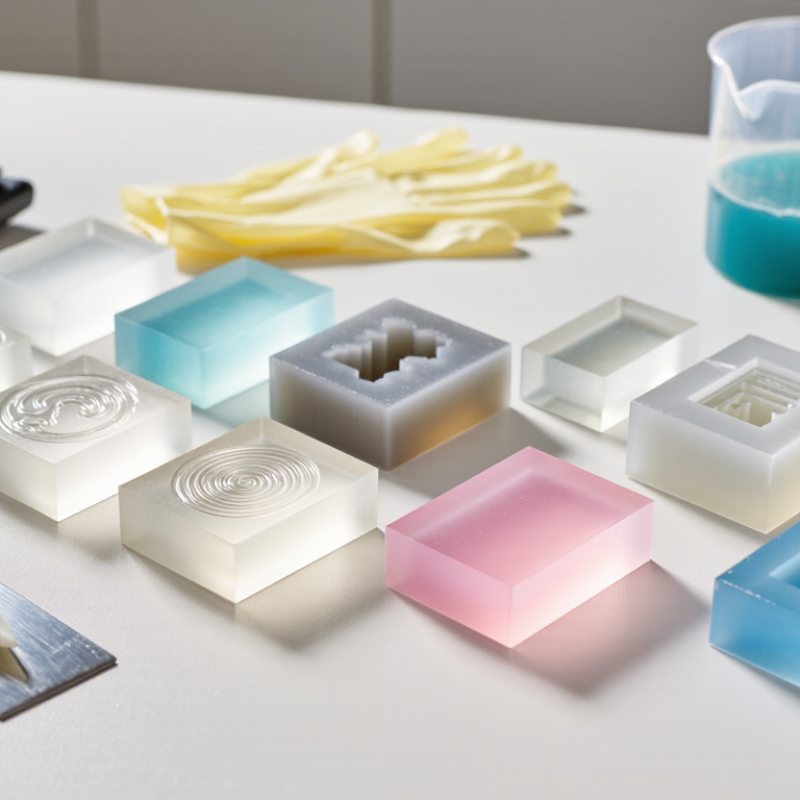
Mold-making silicone is commonly divided into condensation-cure and addition-cure types. Condensation-cure silicone is often forgiving and can work well for larger, less demanding molds. It may shrink more during curing, so check dimensions when close-fitting parts matter. Addition-cure silicone usually has lower shrinkage and captures fine textures well. However, sulfur-containing clay, some coatings, and other contaminants can interfere with its cure. Test a small sample first. That matters.
The cure type is only part of the choice. Shore A hardness affects how easily a mold bends around an undercut or releases a rigid casting. Softer silicone can help with complex shapes, while firmer material may support a broad, flat mold. Viscosity and working time matter, too: thick silicone may trap bubbles around narrow grooves, while a short pot life can make careful pouring stressful. There is no perfect type. It is easy to focus on a specification sheet and miss the shape, casting material, or workspace. A simple test mold can reveal problems that the numbers do not.
Key Factors for Comparing Mold-Making Silicone Rubbers
Comparing mold-making silicone rubbers starts with the part you need to reproduce. Shore hardness affects flexibility: a softer rubber can release undercuts, while a firmer one may support a tall, thin mold. Neither choice is automatically better. Match hardness to the shape and expected handling, not just a product description.
Check viscosity, working time, and cure time together. Low-viscosity silicone can flow around fine lettering and small grooves, but may need careful containment. A longer working time helps when pouring a large mold; a short cure can speed production, though it leaves less time to remove bubbles. Small details count. Read the technical data sheet for mix ratio, temperature range, shrinkage, and tear strength. These figures are more useful than broad claims like “high detail.”
Compatibility matters, too. Some model materials, coatings, or residues can interfere with curing, so test a small sample before committing to a full mold. Silicone that releases cleanly today may still tear after repeated demolding. It is easy to overvalue one impressive specification; in practice, the best comparison depends on your master, mold geometry, and number of castings. A modest test pour can reveal issues a chart cannot.
Choosing Mold-Making Silicone by Shore A Hardness
Softer silicone can help capture fine detail and release complex shapes; firmer silicone can provide more support for larger or less-supported molds. The bars show reference midpoints for common selection bands: 10–20, 20–30, and 30–40 Shore A. These are general guidelines, not fixed specifications—formulations vary, so check the product data sheet and consider the master’s shape, undercuts, and casting material.
Top 10 Silicone Rubbers for Mold Making in 2026
Top 10 Silicone Rubbers for Mold Making in 2026
The best mold rubber depends on the pattern, casting material, and required detail. These ten useful options cover common workshop needs: tin-cure, platinum-cure, fast-setting, slow-setting, 1:1-mix, 10:1-mix, high-tear-strength, soft, firm, and translucent silicone. They are overlapping product categories, not a strict technical ranking. A market signal offers context: Grand View Research valued the global silicone market at USD 18.5 billion in 2022 and projected 6.7% annual growth from 2023 to 2030. That report covers silicone broadly, not mold-making rubber alone.
Tin-cure silicone can suit simple models and budget-conscious projects; platinum-cure options are often chosen for low shrinkage and fine detail. Fast-setting rubber helps with small batches, while slower formulas allow more working time around deep undercuts. High-tear-strength silicone is useful when removing complex casts. Softer grades can release flexible parts, while firmer grades help support large molds. Translucent material makes it easier to see trapped bubbles. Mix ratios vary, so follow the product’s technical data sheet rather than assuming similar handling.
Tips: Measure both components carefully. Mix slowly, scraping the container walls, then pour in a thin stream. Test a small sample first; surface contamination can inhibit curing. A ranking can mislead—match hardness, cure time, and tear strength to the actual pattern.
Choosing the Right Silicone for Your Mold and Casting Material
10 Best Silicone Rubber for Mold Making in 2026?
Choosing silicone starts with the casting material, not just the mold’s shape. For polyurethane resin, check moisture sensitivity and cure compatibility. For plaster or wax, surface detail and easy release may matter more. Platinum-cure silicone generally has low shrinkage, while tin-cure silicone may suit some master patterns better. Always verify the technical data sheet. Small tests matter.
Grand View Research’s 2024 silicone market report valued the global market at about $18.3 billion and projected 6.4% annual growth through 2030. That figure covers silicone broadly, not mold-making compounds, so it signals industry scale rather than mold performance. Compare measured properties instead: ASTM D412 addresses tensile behavior, and ASTM D624 measures tear resistance. Not interchangeable.
For a detailed figurine, lower viscosity can help silicone flow into fine grooves; a deep mold may need stronger tear resistance at thin edges. Check working time against the size of your pour, too. I would not choose by Shore hardness alone. A small test pour can reveal trapped bubbles, tacky surfaces, or difficult release before you commit to a full mold. Data sheets help, but they cannot predict every workshop variable.
Preparing, Mixing, and Curing Silicone for Reliable Molds
Reliable molds begin with clean, dry tools and a measured mix.
Read the technical data sheet for the exact ratio; never estimate by eye.
Scrape the cup’s sides and base while mixing slowly, because unmixed streaks can leave soft patches.
If the material allows it, vacuum-degas the mixture, then pour a thin stream into the mold’s lowest point.
A few bubbles may still cling to fine details.
Temperature and contamination matter.
Keep the work area within the stated range, and avoid sulfur-containing clay or latex near platinum-cure silicone, which may inhibit curing.
Grand View Research’s 2024 industry analysis estimated the global silicone market at US$18.4 billion in 2023, reflecting broad demand for silicone materials; that scale does not guarantee a good mold.
The small-batch process still needs control.
Allow the full cure time before demolding, even when the surface feels firm.
One judgment call remains: vacuum helps remove air, but rushing the pour can introduce it again.
Check the finished mold for tackiness, tears, and trapped bubbles before casting.