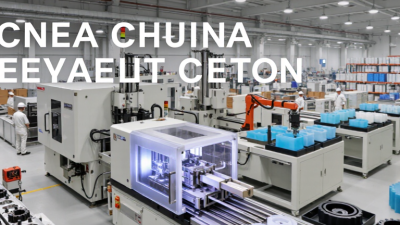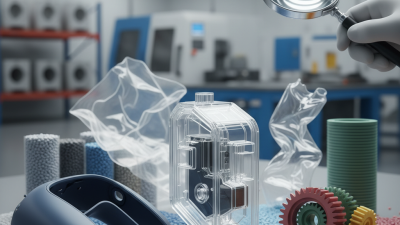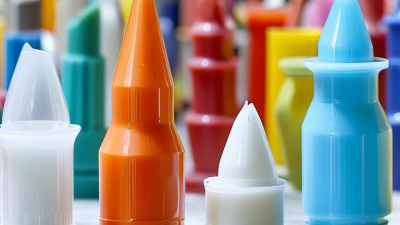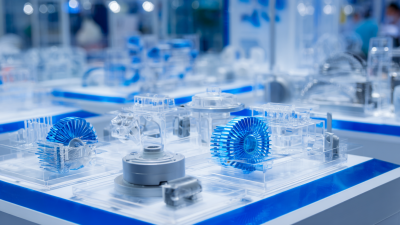
Choosing the right molding products begins with understanding how each product is made, used, and tested. Injection molded parts suit precise housings, medical components, and automotive clips. Blow molded products create bottles, tanks, and hollow containers. Compression molding supports durable electrical parts and composite components. Rotational molding produces large, seamless items, such as outdoor tanks and playground equipment. Thermoformed products often serve packaging, trays, and lightweight covers.
John P. Beaumont, a respected injection-molding engineer and author, has described the mold as “the heart of the injection molding process.” That observation remains practical on the factory floor. A polished cavity can still produce defects when cooling is uneven. A strong resin can still fail when wall thickness changes suddenly. Details matter.
This guide examines the top types of molding products through materials, production methods, performance, and typical applications. It also considers cost, surface finish, dimensional accuracy, and expected service life. These factors often compete with one another. Low unit cost may require expensive tooling. Faster production may reduce design flexibility. A recyclable material may need different processing conditions.
Real manufacturing decisions are rarely perfect. Designers sometimes choose a familiar process too quickly. Buyers may also focus on price before reviewing tolerances or testing requirements. That approach deserves reflection. Reliable selection comes from comparing the complete product lifecycle, not one attractive specification. The following sections provide a practical framework for making that comparison with greater confidence.
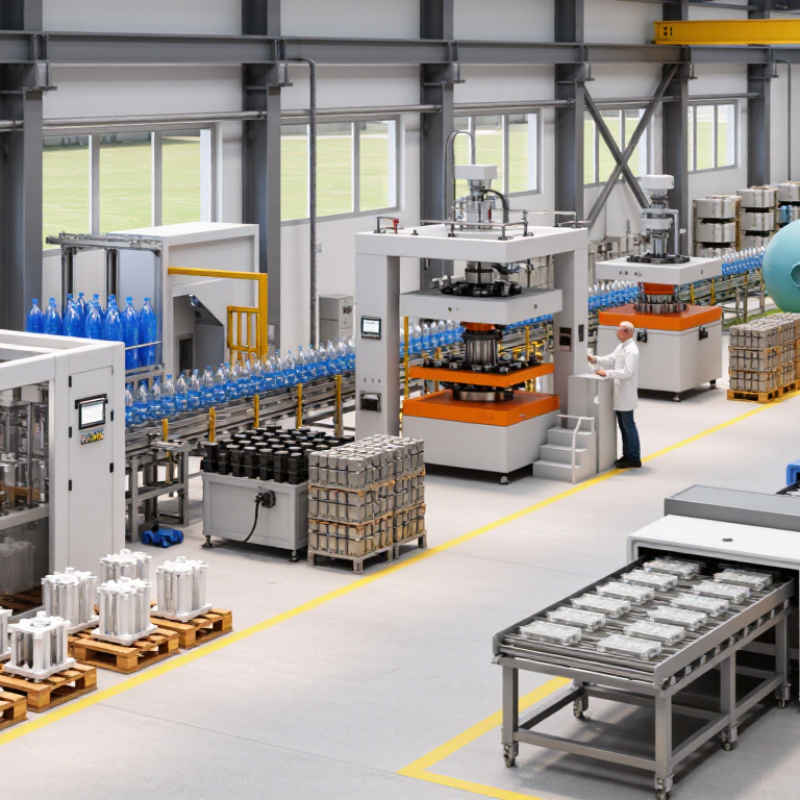
Molding products are parts formed inside a shaped cavity. Heat, pressure, or both help the material follow that cavity. After cooling or curing, the finished part is ejected. Common examples include housings, caps, trays, seals, and automotive panels. The main types include injection molding, compression molding, blow molding, rotational molding, and thermoforming. Each method suits different materials, shapes, volumes, and accuracy requirements.
Injection molding pushes molten plastic into a closed mold. It supports complex details and high-volume production. Compression molding places material into an open cavity before applying pressure. It often suits thermosets and fiber-reinforced compounds. Blow molding creates hollow containers by expanding a heated tube with air. Rotational molding slowly coats a heated mold, producing large hollow parts with relatively low tooling stress. Thermoforming heats a plastic sheet and draws it over a mold.
The basic manufacturing cycle is practical but sensitive. Designers check wall thickness, draft angles, gates, vents, cooling channels, and shrinkage. Operators then control temperature, injection speed, pressure, cooling time, and ejection force. Small errors can create sink marks, short shots, flash, or warpage. That assumption can fail. According to Plastics Europe’s Plastics—The Fast Facts 2024, global plastics production reached 413.8 million tonnes in 2023. Grand View Research estimated the injection-molded plastics market at about 265.1 billion dollars in 2023. These figures show scale, not guaranteed quality. A well-designed mold still needs testing, measurement, and occasional redesign.
| Molding Type | Definition and Basic Principle | Common Materials | Typical Products | Main Advantages | Main Limitations | Best-Suited Production Use |
|---|---|---|---|---|---|---|
| Injection Molding | Molten material is injected under pressure into a closed mold, where it cools and solidifies into the cavity shape. | Thermoplastics, thermosetting plastics, liquid silicone rubber, and some metal alloys. | Caps, housings, connectors, medical components, automotive trim, and consumer product parts. | High repeatability, complex geometries, good surface finish, and efficient cycle times for large volumes. | High tooling cost; design changes can be expensive after the mold is completed. | High-volume production of precise parts with consistent dimensions. |
| Blow Molding | A heated hollow tube or preform is placed in a mold and expanded with air until it conforms to the mold walls. | Polyethylene, polypropylene, polyethylene terephthalate, and other thermoplastics. | Bottles, containers, fuel tanks, drums, and hollow industrial components. | Efficient production of lightweight hollow parts; suitable for thin and relatively uniform walls. | Primarily suited to hollow forms; wall-thickness control and complex details may be limited. | Hollow packaging and containers manufactured in medium to high volumes. |
| Compression Molding | A measured charge of material is placed in a heated mold and compressed until it cures or takes the required shape. | Thermosetting plastics, rubber compounds, composite molding compounds, and reinforced materials. | Electrical insulators, automotive panels, appliance components, seals, and structural composite parts. | Works well with reinforced materials; produces strong parts and can require relatively simple tooling. | Generally slower than injection molding; flash and material waste may require secondary finishing. | Medium-to-high-volume production of durable, heat-resistant, or reinforced parts. |
| Transfer Molding | Material is loaded into a chamber and forced into one or more heated mold cavities through gates or runners. | Thermosetting plastics, rubber, and encapsulation compounds. | Electronic encapsulations, rubber seals, electrical components, and parts with inserts. | Handles inserts and intricate shapes more effectively than many compression processes; good dimensional control. | Tooling and material waste can be higher than in some compression applications. | Molded parts that combine inserts with detailed features or controlled encapsulation. |
| Rotational Molding | Plastic powder or liquid resin is placed inside a hollow mold, which rotates while being heated so the material coats the inner surface. | Polyethylene, plastisol, nylon, and selected thermoplastics. | Storage tanks, coolers, playground equipment, traffic barriers, and large hollow housings. | Low tooling cost, seamless hollow parts, and suitability for large or complex products. | Long cycle times; dimensional precision and fine detail are usually lower than injection molding. | Low-to-medium-volume production of large, hollow, seamless components. |
| Thermoforming | A thermoplastic sheet is heated until flexible and drawn over or into a mold using vacuum, pressure, or mechanical force. | Polystyrene, ABS, PVC, PET, polypropylene, and other sheet thermoplastics. | Food trays, blister packs, interior panels, refrigerator liners, and protective packaging. | Relatively low tooling cost, fast design changes, and economical production of large thin-walled parts. | Material thinning can occur; scrap from trimmed edges may need to be recycled or managed. | Packaging and large-area parts with moderate detail and thin walls. |
| Extrusion Molding | Material is continuously pushed through a shaped die to create a profile with a constant cross-section, then cooled and cut or wound. | Polyethylene, PVC, polypropylene, polystyrene, elastomers, and some composite compounds. | Pipes, tubing, sheets, films, window profiles, wire coatings, and seals. | Continuous operation, efficient material use, and consistent production of long profiles. | Limited to products with generally constant cross-sections; downstream cutting or forming may be required. | Continuous manufacture of profiles, films, sheets, pipes, and coated products. |
| Reaction Injection Molding | Two or more reactive liquid components are mixed and injected into a mold, where they chemically react and cure. | Polyurethane systems, epoxy systems, and selected reactive polymer formulations. | Automotive body panels, equipment housings, insulation parts, and large lightweight structures. | Suitable for large parts, low-pressure tooling, integrated features, and lightweight structures. | Material chemistry and process control are critical; cycle and curing requirements vary by formulation. | Large polymer components requiring low-density structures or integrated features. |
| Ceramic and Powder Injection Molding | Fine ceramic or metal powder mixed with a binder is injected into a mold; debinding and sintering then create the final dense part. | Stainless steel powders, tool steels, alumina, zirconia, and other technical ceramics. | Small precision components, medical instruments, watch components, cutting parts, and electronic hardware. | Produces complex small parts with fine detail and near-net-shape geometry. | Feedstock, debinding, and sintering require careful control; shrinkage must be predicted and managed. | High-volume production of small, complex metal or ceramic components. |