2026 Top Types of Molding Products for Global Buyers
2026 is reshaping how global buyers evaluate molding products. Cost still matters, but it no longer tells the whole story. Buyers now compare material performance, tooling accuracy, production stability, and supplier accountability before placing serious orders.
This overview examines the leading molding products expected to influence international sourcing in 2026. It covers injection-molded components, compression-molded parts, blow-molded packaging, rotational products, and precision silicone items. Each category serves different production needs. A medical housing may require tight tolerances and traceable resin batches. An automotive air duct may demand heat resistance, repeatable wall thickness, and reliable fit. A reusable storage container needs impact strength, clean finishing, and efficient cycle times.
Real purchasing decisions depend on more than catalog images. Sample approval, dimensional reports, material certificates, and factory audits can reveal problems early. Ask for recent production evidence. Inspect gate marks, flash, surface texture, and packaging protection. These details often separate a dependable supplier from an attractive but risky option.
The market is not perfectly predictable. Resin prices may shift, shipping routes may change, and a promising sample can hide weak mass-production control. That deserves attention. Regional standards also differ, so buyers should confirm applicable safety, labeling, environmental, and import requirements before contracting. Experienced teams usually combine technical review with commercial checks. They assess communication speed, corrective-action records, tooling ownership, and after-sales support.
This guide offers a practical starting point for comparing 2026 molding products. It does not replace independent testing. That step remains essential.
Global Molding Products in 2026: Process, Material, and End-Use Classification
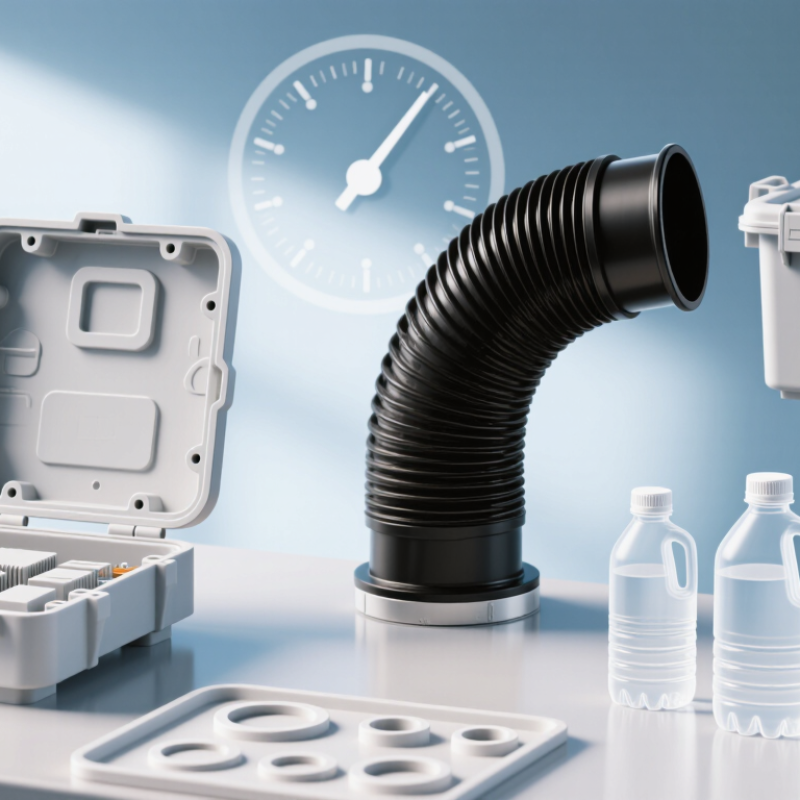
Global molding products in 2026 are best compared through process, material, and end-use classification. Injection molding remains central for high-volume parts, including closures, housings, connectors, and medical components. Blow molding suits bottles and hollow containers, while compression molding supports thicker thermoset or fiber-reinforced parts. Rotational molding serves large, low-volume products such as tanks and outdoor equipment. The boundary is not always clean.
Material choice changes cost, durability, and recycling options. Polypropylene offers low density and chemical resistance. ABS provides a firm surface for appliance housings. Engineering polymers support heat and impact demands, but they often require tighter processing control.
Recycled content is gaining attention. The OECD Global Plastics Outlook reported 460 million tonnes of global plastics production in 2019, with only about 9% ultimately recycled. That figure should make buyers question simple “recyclable” claims.
End-use classification adds practical meaning. Packaging favors speed, lightweighting, and consistent sealing. Automotive molding emphasizes dimensional stability, impact performance, and temperature resistance. Electronics require precise cavities and reliable insulation. Healthcare parts demand documented traceability and controlled manufacturing environments.
The Grand View Research injection molding market report identifies automotive, packaging, electronics, and healthcare as major application areas. I have seen specifications fail when buyers select materials before defining use conditions. That mistake remains common. Product drawings should include temperature, load, chemical exposure, surface expectations, and annual volume. Without those details, even an accurate quotation can be misleading.
Blow-Molded Products: HDPE Containers, PET Bottles, and 2–3% Shrinkage
2026 Top Types of Molding Products for Global Buyers
Blow-Molded Products: HDPE Containers, PET Bottles, and 2–3% Shrinkage
Blow molding supports many daily packaging formats, from chemical-resistant HDPE containers to lightweight PET bottles. HDPE usually suits thicker containers, jerrycans, and handled packaging. PET offers clarity, stiffness, and a clean surface for beverage and personal-care applications.
Dimensional planning matters. A practical starting allowance is often 2–3% shrinkage after cooling. This is not a fixed promise. Resin grade, wall thickness, mold temperature, cooling time, and bottle shape can change the final result. The estimate is imperfect. Trial production remains essential.
Experienced manufacturers measure the finished container at several points, including the neck, shoulder, body, and base. PET also requires careful preform heating and stretch control. HDPE production needs stable parison thickness and controlled mold closing. Small process changes can create uneven walls or distorted openings.
A reliable supplier should document resin specifications, mold dimensions, cavity results, and inspection methods. Buyers should request samples before approving large production volumes. Check filled and empty dimensions. Test stacking, leakage, drop resistance, and closure fit. One detail is often missed: storage temperature can alter measurements after molding. Good decisions come from measured results, not assumptions.
Rotational-Molded Products: Large Hollow Components with 3–5 mm Walls
Rotational-Molded Products: Large Hollow Components with 3–5 mm Walls
Rotational molding suits large hollow products that need low tooling costs and steady wall thickness. Typical walls measure 3–5 mm, or about 0.12–0.20 inches. This range supports tanks, bins, outdoor equipment, and protective housings. The process heats polymer powder inside a rotating mold, creating a seamless shell without weld lines. Grand View Research estimated the global rotational molding market at approximately USD 7.4 billion in 2023, with continued growth expected through 2030. Market estimates vary, because product categories differ between reports.
For global buyers, wall thickness alone should not decide quality. A 4 mm wall may perform well when corners are rounded, ribs are positioned correctly, and cooling remains controlled. Sharp internal angles can create thin spots. Inserts may also disturb material flow. Production teams should inspect sample sections, measure multiple locations, and review drop, load, and leak-test results. ASTM testing methods can support more consistent comparisons between suppliers. Practical details matter: a 2,000-liter tank needs stable flatness, reinforced openings, and reliable lid alignment.
More material does not always mean more strength. That idea deserves scrutiny. Thicker walls can increase cycle time, weight, and shipping cost while hiding uneven distribution. A 2024 market review by Mordor Intelligence projected steady expansion for rotational molding, partly supported by demand for durable, lightweight hollow products. Buyers should request resin specifications, wall-thickness maps, dimensional tolerances, and cooling records. The overlooked issue is often not the mold. It is the inspection discipline after production.
Compression and Thermoformed Products: 0.5–12 mm Sheets and Custom Parts
Compression and Thermoformed Products: 0.5–12 mm Sheets and Custom Parts
Global buyers increasingly request molded products that balance strength, weight, appearance, and production cost. Compression molding suits dense, durable parts with consistent pressure across the material. Thermoforming works well for shaped panels, covers, trays, and protective housings.
Sheet thickness strongly affects performance. Thin 0.5–2 mm sheets support lightweight covers and flexible interior components. Medium 3–6 mm sheets offer better rigidity for equipment guards and enclosures. Heavy 8–12 mm sheets provide impact resistance for demanding industrial applications. The correct choice depends on load, temperature, chemical exposure, and installation space.
Experienced suppliers should review drawings before quoting. They need to check draft angles, corner radii, hole positions, and expected tolerances. Sharp corners often create stress points. Uneven heating can also cause warping during thermoforming. It happens more often than buyers expect.
Compression-molded custom parts can include seals, structural pads, electrical barriers, and shaped inserts. Thermoformed parts can include shallow shells or deep-drawn covers, depending on material behavior and tooling limits. Small trial runs reveal practical issues early. A first sample may look acceptable but still require changes around edges or mounting points.
Reliable production requires material records, dimensional inspection, visual checks, and batch traceability. Buyers should request test data that matches the final application, not generic claims. Packaging also matters. Thin sheets can scratch, while large formed parts may deform during transport. Clear specifications reduce rework, although they rarely remove every manufacturing surprise.