Top 10 Natural Gas Steam Boiler Manufacturers Worldwide
A Natural Gas Steam Boiler is not simply a burner beside a pressure vessel. It is a working system of tubes, controls, feedwater treatment, and safety devices. In a food plant, hospital, or textile mill, a stable steam supply can keep production moving. A poorly matched boiler can waste fuel, cycle too often, or struggle when demand changes.
The International Energy Agency’s Energy Efficiency 2023 report estimated that global energy-intensity improvement slowed to about 1.3% in 2023, below the pace needed to meet its 2030 efficiency goals. That figure is not a boiler scorecard. It does, however, underline why combustion performance, heat recovery, and operating controls deserve close attention. IEA Executive Director Fatih Birol has described energy efficiency as “the first fuel.” For boiler buyers, that idea is practical: efficiency affects fuel bills every day.
This guide examines ten manufacturers serving markets worldwide. It considers product range, stated capacity and pressure, combustion options, controls, service access, and the quality of available technical documentation. The comparison is not a universal verdict. A boiler suited to a small laundry may not fit a refinery’s steam profile, and local support can matter as much as name recognition. Rankings can look precise, but real operating conditions are not. Check each model against your load data, water quality, emissions requirements, and maintenance plan before making a decision.
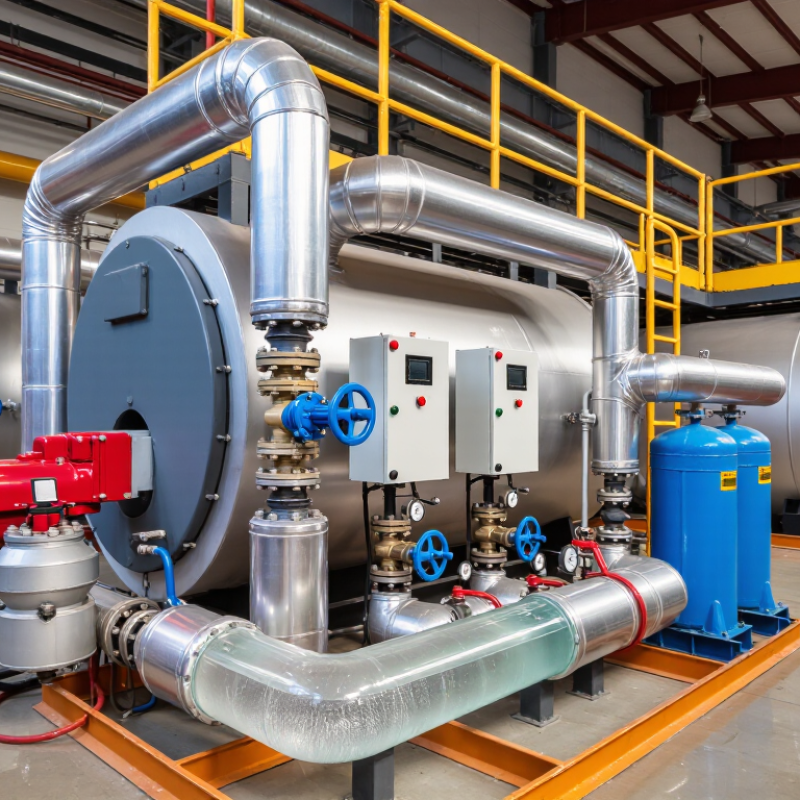
Natural Gas Steam Boilers: Design, Operation, and Industrial Uses
Natural gas steam boilers convert fuel energy into heat through a burner, furnace, and heat-transfer surfaces. Feedwater absorbs heat, then steam travels through insulated pipes to process equipment. The U.S. Department of Energy’s Improving Steam System Performance: A Sourcebook for Industry reports that steam systems use about 30% of energy in U.S. manufacturing. That figure shows why boiler design and distribution both matter.
In food plants, chemical facilities, and paper mills, steam supports cooking, heating, cleaning, and drying. Operators monitor pressure, feedwater quality, flue-gas oxygen, and stack temperature. An economizer can recover heat from exhaust gases to warm incoming water. Yet real production rarely holds a steady load; controls must respond without wasting fuel or causing pressure swings. The design looks tidy on paper. Daily operation is messier.
Tips: Check for leaks around valves and pipe joints. Track fuel use against steam output, not fuel use alone. Review water-treatment and burner records regularly. Small checks matter. Even a useful efficiency measure needs site-specific verification.
Criteria for Evaluating Global Boiler Manufacturers
A global boiler manufacturer should be judged by verifiable performance, not catalog claims. Compare published efficiency at the same load, fuel quality, and return-water temperature. Ask for test records showing emissions, steam output, and pressure stability under operating conditions. Independent inspection and clear reporting make claims easier to verify across markets. A unit that performs well in a brochure may behave differently during frequent demand swings. Small detail.
Review the manufacturer’s engineering support, component traceability, and access to replacement parts in the buyer’s region. Check whether installation guidance covers water treatment, burner tuning, condensate return, and operator training. These details shape uptime. Assess warranty terms alongside local service response times; a long warranty is less useful if parts take weeks to arrive. Request references from facilities with similar steam loads, climate, and maintenance staffing. No scorecard is perfect, and a neat ranking can hide gaps in evidence. Treat unclear data cautiously, and record assumptions before comparing suppliers.
Leading Natural Gas Steam Boiler Manufacturers Worldwide
Leading Natural Gas Steam Boiler Manufacturers Worldwide
Leading natural gas steam boiler manufacturers combine engineering, dependable production, and practical support. Their teams should explain how boiler capacity matches a facility’s steam demand, fuel quality, and operating schedule. A well-designed system can reduce wasted heat, but performance depends on correct sizing and installation. Look for clear technical documents, realistic efficiency data, and access to replacement parts. Global reach matters less if local service is difficult to obtain.
Tips: Ask manufacturers for performance data at your expected load, not only at peak output. Request details about maintenance access, burner controls, and emissions testing. Check whether local technicians can inspect the unit and source parts promptly. Small details matter.
Compare proposals using the same operating assumptions. Confirm what is included, such as controls, commissioning, operator training, and warranty coverage. Ask how the manufacturer supports safe startup and routine inspections. Requirements vary by location, so verify applicable codes with qualified local professionals. A polished brochure cannot replace a careful review of drawings and service plans. Even a thorough comparison can miss something; unclear answers deserve follow-up before purchase.
Comparing Manufacturer Technologies, Capacities, and Applications
Comparing natural gas steam boiler manufacturers is more useful when the focus is on engineering fit, not ranking alone. Fire-tube designs often suit smaller plants and steady steam demand, with compact, packaged equipment. Water-tube systems are commonly considered for higher pressures or larger output. Actual limits vary by model and operating conditions.
Capacity should match the facility’s peak load and daily pattern. A food-processing line may need reliable process steam during long shifts, while a hospital may value staged, modular units that keep operating during maintenance. Controls that coordinate multiple boilers can reduce unnecessary cycling. Still, quoted efficiency figures need context: fuel quality, feedwater temperature, blowdown, and load all affect real performance. Numbers need context.
Compare emissions options, service access, and controls alongside rated output. Low-NOx burners may help meet local requirements, but performance should be confirmed for the specified boiler and site conditions. Ask for verified operating data, clear maintenance intervals, and references from similar applications. A brochure can make every unit look ideal; I would also check how it performs at partial load, where actual demand often spends much of its time.
Natural Gas Steam Boiler Technologies Worldwide
Indicative steam-output capacities and common applications by boiler design—not a manufacturer ranking.
Ranges are generalized and overlap; actual capacities depend on pressure, configuration, and product design. The logarithmic scale makes small and large capacity ranges easier to compare.
Key Factors in Selecting a Boiler Manufacturer and System
Selecting a natural gas steam boiler manufacturer begins with the plant’s actual steam demand, not the largest capacity on a brochure. Map peak and typical loads, operating pressure, feedwater quality, and expected hours of use. Ask for performance data at partial load, since a boiler may spend much of its life below peak demand. Confirm that the proposed system includes suitable burners, controls, water treatment, and safety devices. Small details matter.
Tips: Share a measured load profile and recent fuel bills with shortlisted suppliers. Request references from facilities with similar steam duties, plus clear commissioning and maintenance plans. Check local service coverage and the availability of replacement parts. Compare lifecycle costs, not purchase price alone.
A capable manufacturer should explain assumptions, limits, and how the package will integrate with existing pipework and ventilation. Ask how the system handles changing demand and what operating data can be monitored. Request written guarantees for stated performance, with test conditions defined. A common mistake is treating advertised efficiency as a year-round result; actual performance depends on load, setup, and maintenance. Even a careful specification can overlook site constraints, so a site survey is worth the time. I would not choose on paper alone.