China has become a major production base for profile wrapping equipment. Its manufacturers serve furniture, flooring, door, and interior-decoration companies worldwide. This guide examines China’s Top 10 Profile Wrapping Machine Manufacturers and their practical strengths.
A capable Profile Wrapping Machine should deliver stable feeding, accurate adhesive application, controlled temperature, and consistent surface pressure. Small differences matter. A loose edge can damage an entire production batch. As Dr. Markus Schmid, an industrial automation consultant, explains, “Wrapping quality depends on process stability, not machine speed alone.” This principle deserves attention when comparing Chinese suppliers.
The selected manufacturers are considered through engineering experience, production capacity, customization ability, component quality, after-sales service, and export performance. Some companies focus on affordable standard machines. Others develop automated lines with servo control, infrared heating, and online inspection. Their brochures may look similar. Factory details often tell a different story.
Buyers should inspect sample results, adhesive compatibility, spare-parts availability, and operator training. A machine that performs well during a demonstration may behave differently in continuous production. That is an uncomfortable truth. It should not be ignored.
This overview aims to provide a balanced starting point for distributors, furniture manufacturers, and international project buyers. Rankings can change as technology, service networks, and customer feedback develop. Careful verification remains essential.
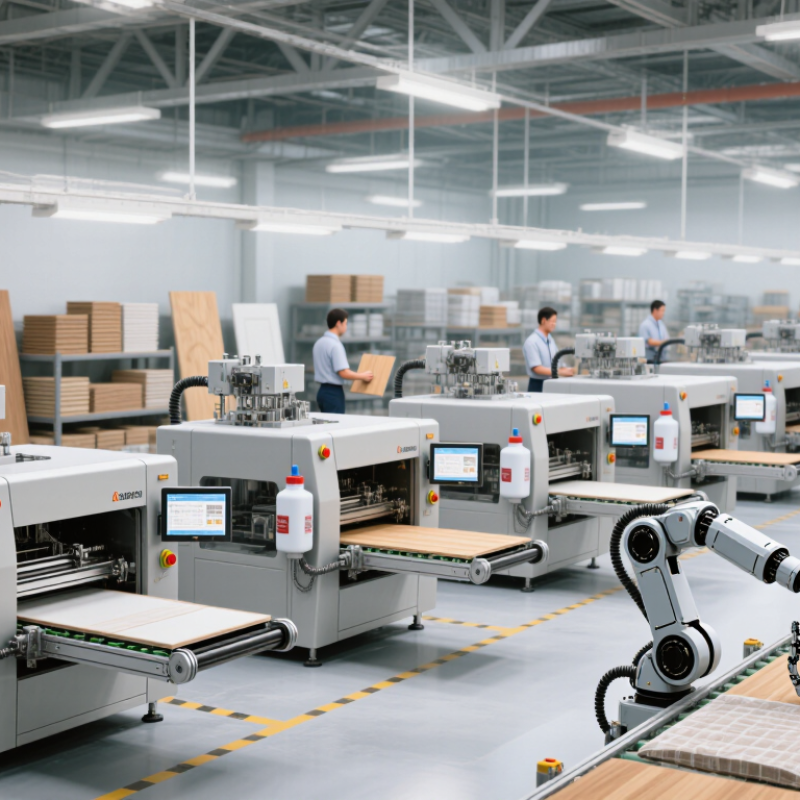
A profile wrapping machine is industrial equipment that covers long, shaped materials with decorative or protective film. It commonly processes PVC, aluminum, wood, and composite profiles. The machine feeds a profile through guide rollers while an adhesive system bonds film to its surface. Pressure rollers then press the film around edges, grooves, and corners. Some models use hot-melt or reactive adhesives, depending on the film and substrate.
The process needs accurate tension control. Too much tension can stretch the film. Too little may create wrinkles or bubbles. Operators also adjust temperature, pressure, line speed, and profile alignment.
Small errors become visible under bright factory lighting. Very visible.
In a practical production trial, technicians usually test several profile shapes before continuous operation. Flat sections are relatively easy, but deep channels and sharp transitions demand careful tooling. Sensors can monitor position and film movement, yet they cannot replace regular cleaning and inspection. Dust on a guide roller may leave repeated marks across meters of finished material.
A reliable machine should deliver stable adhesion, clean edges, quick changeovers, and consistent speed. However, performance also depends on adhesive quality, film flexibility, operator skill, and maintenance habits. It is not a magic box. A well-designed system can improve output, but an unsuitable setup may increase waste instead.
Evaluating Chinese profile wrapping machine manufacturers requires more than comparing prices. A reliable review begins with factory evidence, process knowledge, and measurable trial results. The International Federation of Robotics reported 276,288 industrial robot installations in China during 2023, representing about 51% of global demand. This suggests strong automation capability, but it does not prove wrapping expertise.
The evaluation should examine profile handling, film tension, heating accuracy, glue control, and changeover time. Ask for a factory acceptance test using real profiles, not showroom samples. Record output speed, film consumption, defect rates, and energy use. A five-minute demonstration proves little. PMMI industry research continues to identify labor shortages and automation as major packaging investment drivers. Therefore, accessible controls and stable automatic feeding deserve serious attention. Operators should understand the interface quickly.
Documentation also separates mature manufacturers from weak suppliers. Check ISO 9001 certification, electrical safety files, spare-parts availability, software backups, and response times. Request customer references from similar profile sizes and materials. Total cost matters more than the initial quotation. Downtime, adhesive waste, and difficult maintenance can erase a low purchase price. The ISO Survey 2023 recorded China as having more than 400,000 ISO 9001 certificates, so certification alone cannot establish quality. It is only one checkpoint. A polished factory can still hide inconsistent assembly. Independent inspection remains worthwhile. My own caution is simple: promised speed often receives more attention than repeatable accuracy.
China’s Top 10 Profile Wrapping Machine Manufacturers represent a competitive manufacturing sector built around precision, speed, and adaptable production. The strongest manufacturers usually provide machines for doors, windows, furniture parts, and decorative panels. Their equipment may support PVC film, wood veneer, paper, or aluminum profiles. Practical experience matters here. A machine can appear impressive in a showroom, yet perform differently during continuous factory operation.
Reliable manufacturers normally offer servo control, automatic tension adjustment, accurate adhesive application, and stable temperature management. They should also explain production limits clearly. Ask about wrapping speed, compatible profile shapes, adhesive types, and maintenance access. Factory testing is valuable, especially when profiles include corners, grooves, or changing widths. Technical documents, spare-part availability, operator training, and responsive service also indicate professional reliability. No ranking is permanent. A supplier may perform well for one profile and poorly for another.
Tips: Request sample wrapping with your actual profile. Check edge adhesion after several days. Inspect film alignment under strong light. Confirm voltage, installation support, and delivery terms before signing. Keep a small trial budget. It may prevent a costly mistake.
China Top 10 Profile Wrapping Machine Manufacturers
When comparing profile wrapping machine manufacturers, inspect control accuracy before purchase price. Servo-driven film feeding should maintain stable tension across wood, aluminum, and composite profiles. A practical benchmark is repeatable positioning within a few millimeters during long production runs. Modern PLC systems also record speed, temperature, alarms, and production counts. Useful data, not decoration.
Heating technology deserves close attention. Hot-air circulation can improve adhesive activation, while infrared heating may shorten response time. Ask for measured energy use per finished meter. The International Federation of Robotics reported 541,302 industrial robot installations worldwide in 2023, showing how automation is becoming standard across manufacturing. Yet, a machine with automation still needs accessible manual controls. Operators notice this quickly.
Changeover design often separates experienced suppliers from ordinary ones. Tool-free rollers, recipe storage, automatic film centering, and vision inspection can reduce setup mistakes. PMMI’s 2024 State of the Industry report highlights labor shortages and automation as continuing packaging priorities. Check whether the supplier provides test runs, spare-part lists, training, and remote diagnostics. These details affect uptime more than impressive brochures. Sustainability also needs evidence. Smithers’ packaging forecasts emphasize material efficiency and recyclable structures, but thinner film can increase breakage. I would not trust a “low-waste” claim without film-loss records, power readings, and sample profiles.
Choosing among China’s top profile wrapping machine manufacturers requires more than comparing quotations. Fortune Business Insights valued the global packaging machinery market at about US$45.7 billion in 2023, with continued growth expected through 2032. This growth increases supplier choice, but also creates noise. A low price may hide slower changeovers, weak software support, or costly replacement parts.
Start with your actual production details. Provide the profile width, material, wrapping film, target speed, bundle shape, and daily operating hours. Ask each manufacturer for a filmed factory acceptance test using your own profiles. Check edge quality, film tension, seal consistency, and changeover time. Small details matter. Request measured results, not promises. PMMI’s recent industry outlook identifies labor shortages and automation as major packaging concerns, so evaluate recipe storage, fault alerts, remote diagnostics, and operator training.
Audit the manufacturer’s quality process and export experience. ISO 9001 certification helps, but it does not replace inspection. Review welding quality, electrical components, safety guarding, and spare-parts availability. Ask for a written response-time commitment and at least three comparable customer references. A useful calculation includes purchase cost, energy use, film waste, downtime, maintenance, and shipping. The cheapest machine may become expensive after six months. I would also inspect one installed machine, if possible. Catalog photos can mislead. Some specifications need questioning, especially maximum speed under real production conditions. Allow room for doubt; reliable decisions are rarely based on one impressive quotation.
| Evaluation Dimension | What to Compare | Typical Technical Reference | Why It Matters | Recommended Verification |
|---|---|---|---|---|
| Product Compatibility | Profile shape, dimensions, weight, surface finish, and required wrapping material | Confirm the machine is designed for the actual product range rather than a single sample size | A machine that cannot handle dimensional variation may cause film tearing, poor sealing, or frequent stoppages | Submit representative samples and request a recorded factory test |
| Wrapping Method | Horizontal flow wrapping, end sealing, shrink wrapping, or custom profile wrapping | Select the method according to product geometry, packaging appearance, and sealing requirements | Different wrapping methods require different forming, sealing, and film-control systems | Check finished-pack samples, seal strength, package dimensions, and film tracking |
| Production Speed | Rated cycles per minute and actual output under normal operating conditions | Compare guaranteed sustained output, not only the maximum no-load speed | Actual productivity is affected by product loading, film changes, rejects, and changeover time | Request an acceptance test using the target product and agreed production speed |
| Film Compatibility | Film type, width, thickness, roll diameter, core size, and sealing temperature | Common packaging films include PE, PP, laminated films, and heat-sealable barrier structures | Incorrect film specifications can lead to wrinkles, weak seals, static, or excessive waste | Verify film specifications in writing and test the exact film grade intended for production |
| Sealing Performance | Longitudinal and end-seal design, temperature control, pressure adjustment, and seal consistency | Independent temperature control and stable sealing pressure are important for repeatable packaging | Reliable seals protect products and reduce leakage, contamination, and customer complaints | Perform seal-integrity checks at start-up, steady state, and after speed changes |
| Automation and Controls | PLC, touchscreen interface, servo drives, sensors, alarms, and recipe storage | A recipe-based control system can simplify repeat production and reduce operator adjustment time | Better controls improve repeatability, troubleshooting, and changeover management | Request the control-system specification, interface language options, and alarm-history demonstration |
| Changeover Flexibility | Tool-free adjustment, format parts, stored recipes, and time required for product changes | Machines with quick-adjust mechanisms generally reduce downtime between product formats | Shorter changeovers are valuable for mixed production and small or medium batches | Measure changeover time during a live demonstration with at least two product formats |
| Safety and Compliance | Guards, emergency stops, electrical protection, documentation, and applicable market requirements | The machine should be supplied with risk documentation, electrical diagrams, manuals, and conformity information | Compliance supports safe operation and reduces customs, installation, and workplace risks | Ask for the complete technical file and confirm requirements with the destination-market authority |
| After-Sales Support | Installation, training, remote troubleshooting, spare parts, and service response | Clarify support hours, response channels, replacement-part lead times, and warranty coverage | Prompt technical support can reduce the cost of unplanned production downtime | Include service-level commitments, spare-parts lists, and escalation procedures in the contract |
| Total Cost of Ownership | Purchase price, tooling, freight, installation, energy use, film waste, maintenance, and spare parts | Evaluate five-year operating costs rather than comparing equipment price alone | A lower purchase price may be offset by higher waste, downtime, maintenance, or upgrade costs | Use a standardized quotation template and request a complete cost breakdown |