
How to Choose the Best Real Time Monitoring Sensor?

Choosing the best Real-Time Monitoring Sensor starts with the decision it must support. A temperature alert for a cold-storage room has different needs from vibration monitoring on a factory motor. Define the measurement range, acceptable error, response time, and conditions at the installation point. A sensor that performs well in a clean laboratory may drift in humidity, dust, or constant vibration.

Quality expert W. Edwards Deming is often quoted: “In God we trust; all others must bring data.” For sensor selection, the reminder is practical: data must be dependable enough to guide action. Check calibration requirements, sampling frequency, transmission delays, and how the system behaves when a network connection drops. Ask for test results under conditions close to your own. A polished specification sheet is not proof of field performance.

Then consider the full operating picture. Will technicians reach the sensor easily? Does it need battery replacement, cleaning, or recalibration? Can its data connect to existing dashboards without costly workarounds? Small details matter. A sensor mounted above a warm compressor, for example, may report a misleading reading if placement is ignored. It is tempting to choose the most accurate model on paper; that can be the wrong choice if maintenance is unrealistic. There is no perfect sensor. The right one balances accuracy, durability, connectivity, and cost for a clearly defined use. Before committing, compare a short pilot’s readings with a trusted reference instrument and document any gaps. That extra check can reveal assumptions worth revisiting.
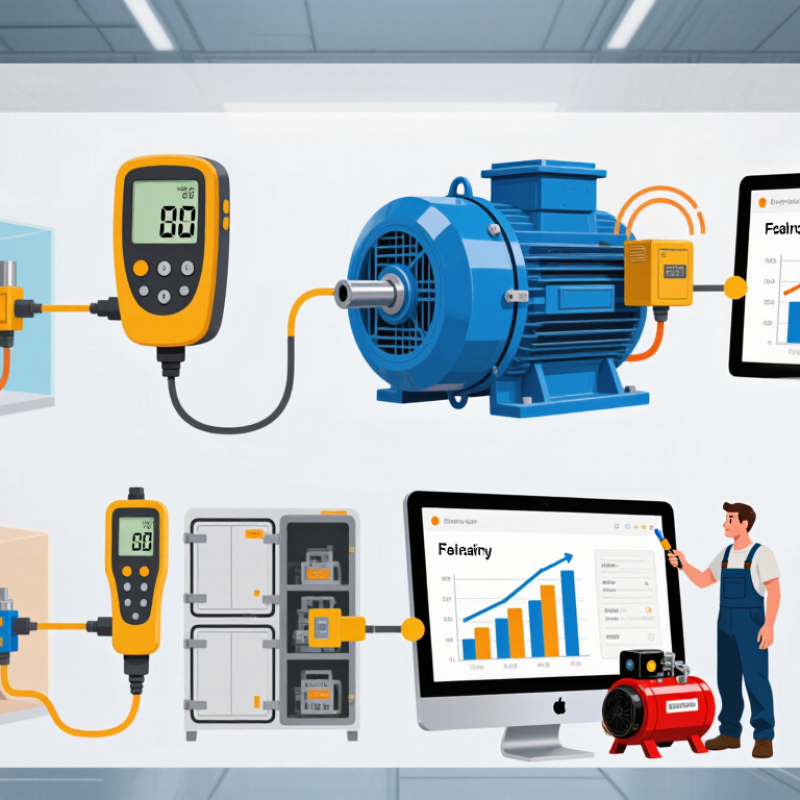
How to Choose the Best Real Time Monitoring Sensor?

Define the Monitoring Requirements and Operating Conditions

Define the measurement before comparing sensors. Are you tracking temperature, pressure, vibration, flow, or another variable? Specify the range, required accuracy, and smallest change that should trigger attention. “Real time” also needs a practical definition: a two-second delay may suit a tank level, but not a fast-moving machine fault. Be specific.

Consider the actual installation, not just the equipment datasheet. A sensor beside a warm motor may face heat, vibration, and oily dust. Outdoor units may encounter rain, sunlight, and sharp temperature swings. Record mounting space, cable distance, available power, and network coverage. These details can rule out a sensor that looks suitable on paper. Measure twice.

Set operating limits, including normal and peak temperatures, humidity, shock, and cleaning exposure. Check whether accuracy holds across that full range, and ask how calibration drift is detected. A quick response time is useful only if the readings remain stable. I have seen teams focus on sampling speed and overlook poor mounting, which made the data noisy.

Finally, define what the data must do. Specify alert thresholds, acceptable false alarms, reporting intervals, and how readings will reach operators or control systems. Test candidate sensors at the intended mounting point under representative conditions. A short pilot can reveal interference or installation problems, though it may not capture seasonal changes. Keep that uncertainty visible in the selection record.

Identify the Parameters the Sensor Must Measure

How to Choose the Best Real Time Monitoring Sensor?
Identify the Parameters the Sensor Must Measure

Start with the decision the sensor must support. Is it detecting overheating, a pressure drop, excess vibration, or changing humidity? List the process variable, its normal range, and the warning threshold. Then check accuracy, response time, sampling rate, and operating conditions. A sensor beside a hot pump may need a different temperature range and enclosure than one in a clean control room. The U.S. Department of Energy’s 2010 Operations & Maintenance Best Practices Guide estimates predictive maintenance can save 8–12% over preventive maintenance. That benefit depends on useful measurements, not simply collecting more data.

Tips: Match the measurement range to real operating conditions, including brief peaks. Confirm the sensor’s output works with your monitoring system. Check calibration intervals and ask how measurement uncertainty is reported. For vibration, specify the frequency range and mounting location; a loose mount can distort readings. For flow, consider fluid type and expected velocity. Small details matter.

A neat specification sheet can still mislead. A sensor may be accurate in a laboratory but slow to flag a rapid process change. Don’t choose resolution alone; verify response time against how quickly conditions can become unsafe or costly. Also consider what the data cannot show. One temperature reading may miss a developing bearing fault that vibration data reveals. Revisit these choices after installation, because real operating conditions rarely match every planning assumption.

Compare Sensor Types and Measurement Technologies

Choosing a real-time monitoring sensor starts with the variable, not the product label. Temperature, pressure, humidity, vibration, and gas concentration require different sensing principles. A thermistor responds quickly over a limited range, while an RTD often provides stable readings across broader operating conditions. Thermocouples tolerate high temperatures, but their small voltage needs careful signal conditioning. Small differences matter.

Pressure sensors use piezoresistive elements for compact, robust measurement; capacitive designs can detect subtle changes with low power. For humidity, capacitive sensors are common, though condensation and dust can distort readings. Optical sensors suit particle or liquid detection when a clear path is available. No type wins everywhere.

Compare response time, accuracy, drift, and measurement range together. A sensor rated for fast updates may still deliver delayed data if its filter or network is slow. Check calibration intervals, enclosure protection, and output compatibility with the monitoring system. Test it near real noise sources, such as a motor or warm exhaust. The test may expose an inconvenient limitation. Mounting position is easy to overlook; airflow and vibration can skew readings even when the sensor itself is sound. Some specifications are less useful than they look.

Evaluate Accuracy, Response Time, and System Compatibility

Choosing a real-time monitoring sensor starts with the conditions it will actually face. Check accuracy across the expected temperature, humidity, and vibration range, not just the best-case figure on a datasheet. A small error can distort alarms. NIST’s Technical Note 1297 explains why measurement uncertainty matters when comparing readings. Also check response time, often listed as T90: the time needed to reach 90% of a measured change. If a pipe temperature can shift in seconds, a slow sensor may report the problem too late.

Compatibility is practical, not glamorous. Confirm the sensor’s output protocol, supply voltage, connector, and operating range match your controller and installation. Then test whether readings arrive with usable timestamps and units. The U.S. Department of Energy’s 2019 Smart Energy Analytics Campaign reported median annual energy savings of 4% across participating buildings. That result does not prove sensors alone create savings, but dependable data supports useful analytics. A common mistake is trusting the specification sheet too much; field conditions are messier.

Tips: Test one sensor at the actual mounting point before buying in quantity. Compare its readings with a calibrated reference, and log response time during a real process change. Keep a little uncertainty in the plan.

How to Choose the Best Real Time Monitoring Sensor?

Evaluate accuracy, response time, and system compatibility

How to read this chart: These representative example values illustrate the trade-offs between sensor types; actual accuracy and response time depend on the specific sensor, probe construction, installation, and operating conditions. Before selecting a sensor, confirm that its measurement range, electrical output, power requirements, and communication interface are compatible with your monitoring system.

Select and Validate the Best Sensor for the Application

Choosing a real-time monitoring sensor starts with the decision its readings must support. Define the variable, operating range, required response time, and acceptable error. A sensor for a slowly changing tank temperature may not suit a rapidly heating motor housing. Match the sensing method to the material and conditions, including moisture, vibration, dust, and available mounting space. Check whether the output can be read by your monitoring system and whether its sampling rate captures meaningful changes. Faster is not always better. It can add cost and data noise without improving decisions.

Validate the candidate in conditions close to actual use. Compare its readings with a trusted reference across low, typical, and high operating points. Introduce a controlled change and record how quickly the sensor responds. Repeat the test; one clean result can be misleading. Then check the installed position, wiring, and nearby sources of interference. Set acceptance limits before testing, and record calibration dates, deviations, and maintenance needs. A bench test helps, but it cannot reproduce every field condition. That gap deserves attention. If readings drift, lag, or vary with placement, investigate the setup before assuming the sensor is faulty.