How to Choose Precision Injection Robotics for Your Business?
Choosing the right Precision Injection Robotics for your business can significantly impact production efficiency. As industries evolve, the demand for precision and speed increases. Robotics play a critical role in meeting these demands. They ensure high-quality results with minimal waste and reduce labor costs.
Understanding your specific needs is essential. Different applications require different types of robotics. Look for features that align with your manufacturing goals. For example, consider the range of motion, speed, and payload capacity. Each aspect affects the overall performance of your automation system.
Furthermore, the integration of these robotics into existing workflows may pose challenges. Companies must evaluate compatibility with current machines and processes. While new technology offers benefits, its implementation can be complex and requires careful planning. Investing time in research and consulting experts can enhance reliability. These steps will help ensure that your investment in Precision Injection Robotics pays off in the long run.
Understanding Precision Injection Robotics and Their Applications
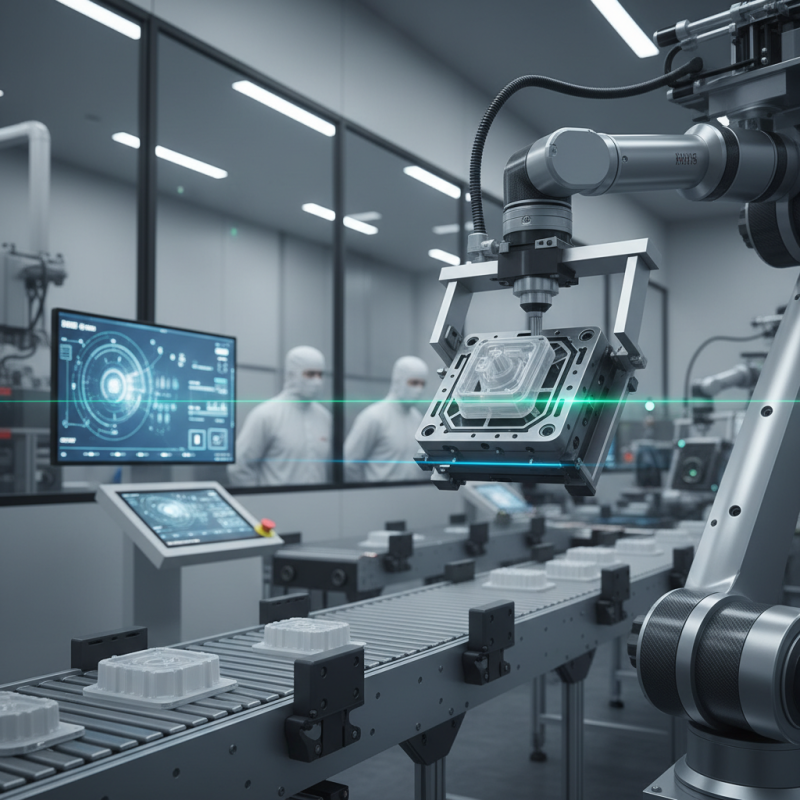
Precision injection robotics play a vital role in various industries. They enhance manufacturing processes and improve product quality. These robots are designed for accuracy, consistency, and speed. Businesses across sectors use them for applications like medical device production, automotive parts, and consumer goods.
Understanding how these robots work is crucial. They operate using a combination of advanced sensors and software algorithms. This allows for precise control of the injection process. The benefits include reduced waste and higher efficiency. However, the initial setup can be complex. Companies must evaluate their production needs and capabilities.
Tip: Regular training can maximize the effectiveness of your precision injection robotics. Investing in workforce development ensures that operators fully understand how to utilize the technology.
Another point to consider is maintenance. These systems require regular check-ups to function optimally. Neglecting maintenance can lead to costly downtimes.
Tip: Establish a routine maintenance schedule to prolong the lifespan of your equipment.
Despite their benefits, integrating precision injection robotics is not without challenges. Companies must remain flexible and open to adapt their workflows. Balancing automation with human oversight is crucial for achieving the best results.
Identifying Your Business Needs for Precision Injection Robotics
Identifying your business needs for precision injection robotics requires a clear understanding of your production goals. According to a recent industry report, 39% of manufacturers reported achieving significant efficiency gains after implementing robotic solutions. Therefore, businesses must analyze current production rates, costs, and quality output. This assessment helps in selecting the right robotic systems tailored to unique operational demands.
Next, consider how precision injection robotics can align with your workforce capabilities. Reports indicate that 57% of companies experienced improved employee satisfaction by automating repetitive tasks. However, integrating new technology poses challenges. Employees may resist change or feel threatened by automation. A thoughtful approach includes training programs and open communication about job security and skill development.
Lastly, evaluating the return on investment (ROI) is crucial. In a survey, 65% of firms found that robotic investments paid off within three years. Yet, not all installations lead to immediate benefits. Some businesses encounter technical issues or underperformance. Thus, careful planning and ongoing assessment of robotic performance are essential. Understanding these dynamics creates a path towards successfully adopting precision injection robotics for your manufacturing needs.
Evaluating Key Features of Precision Injection Robotics Systems
When evaluating precision injection robotics systems, consider the key features that will impact your production. One critical aspect is the accuracy of the system. Precision is crucial in injection molding, as even minor variations can affect product quality. Look for systems that offer high repeatability and minimal deviation.
Speed and efficiency are other vital factors. Robotics should not only be quick but also have adaptive capabilities to handle various materials. They should optimize cycle times and enhance throughput without compromising quality. Keep an eye on the system’s ability to work with different mold sizes and shapes.
Tips: Always conduct a thorough assessment of your production needs. Ask yourself: What volume of products do you plan to manufacture? Analyzing your requirements helps in choosing the right technology. Additionally, consider the support and service network available. A reliable provider can make a significant difference in maintaining your systems. Training for your team is equally important. Well-trained operators can maximize the robotic system's potential.
Comparing Cost and ROI of Precision Injection Robotics Solutions
When considering precision injection robotics, understanding the cost and potential ROI is critical. Many businesses underestimate the initial investment required. The robots themselves can be expensive, but this is just part of the equation. Installation, training, and ongoing maintenance also add to the expense. Companies need to budget carefully.
However, the return on investment can be significant. Precision robotics can increase manufacturing speed and accuracy. Improved quality often leads to reduced waste and better end products. This can greatly enhance customer satisfaction. Tracking your production metrics before and after implementation can provide insight into actual gains. Remember that not all robotic solutions yield immediate results.
Evaluating long-term vs. short-term costs is essential. Some businesses report that ROI takes time. A critical assessment of your processes is necessary. Reflect on specific needs and potential challenges. By aligning robotics capabilities with business goals, you can better gauge potential returns. Take time to research and compare different solutions.
Selecting a Reliable Supplier for Precision Injection Robotics
When selecting a supplier for precision injection robotics, understanding their reputation is crucial. Reliable suppliers should demonstrate extensive experience in the field. The International Federation of Robotics reported that the global industrial robot market is projected to grow by 14% annually. This growth highlights the importance of partnering with a trusted supplier who can keep pace with evolving technologies.
Check for certifications and industry standards. Suppliers adhering to ISO and other quality benchmarks often indicate a commitment to excellence. It's also beneficial to evaluate their track record with previous clients. Customer testimonials can reveal important insights into their reliability and service quality. The National Institute of Standards and Technology (NIST) emphasizes that choosing the right partner can significantly impact operational efficiency.
Consider the supplier’s support and training options. Effective collaboration is essential for long-term success. A feedback loop can help suppliers improve their products and services. Transparency in communication is vital. Some suppliers may promise more than they can deliver. Take time to assess all options carefully. Evaluate their product range and custom solutions. This attention to detail can help businesses avoid costly mistakes in the future.